
What Is the Beverage Manufacturing Process?
Put simply, the beverage manufacturing process is the controlled engineering sequence that turns raw farm ingredients, pure water, and precise additives into shelf-stable drinks. For importers, distributors, and private label owners, this process is your contract baseline. It dictates your product’s shelf life, taste consistency, and export readiness.
Brands usually enter production through two commercial routes:
- OEM beverage manufacturing: You provide a locked recipe and target specs. The factory handles batch execution, filling, and packaging.
- ODM beverage service: You bring a product concept. Factory R&D formulates the liquid, runs pilot trials, and establishes the production standard.
Regardless of your contract model, every production run moves through strict quality gates—from raw fruit inspection to final shipping clearance.
From Ingredient Approval to Beverage Processing
No single production line fits every drink. While every beverage production process follows a core sequence, actual operating setups change based on three main variables:
- Beverage Category: 100% NFC fruit juices, coconut water, RTD teas, and carbonated soft drinks each require distinct thermal and pressure handling.
- Thermal Filling System: Aseptic cold filling, High-Temperature Short-Time (HTST) hot-filling, or pressurized carbonated dosing.
- Packaging Format: Aluminum cans (250ml/330ml/500ml), PET bottles, glass, or PP containers.
Here is how a commercial production line operates across the six primary beverage manufacturing steps:
   BEVERAGE MANUFACTURING LIFECYCLE

  [Step 1] Raw Material QC & Inspection
      ↓
  [Step 2] Dosing & Formula Blending (Calibrated to Taste Target & Spec)
      ↓
  [Step 3] Thermal Processing & Preservation (HTST / Aseptic / Carbonation)
      ↓
  [Step 4] High-Speed Filling & Sealing (Cans / PET / Glass / PP)
      ↓
  [Step 5] Incubation, Lab Testing & Lot Traceability (COA Issuance)
      ↓
  [Step 6] Container Loading & Phytosanitary Export Dispatch

Beverage manufacturing process
Step 1: Raw Material Sourcing & QC Screening
Every batch starts with strict raw material intake. QC technicians sample incoming tropical purees, fruit concentrates, acids, and sweeteners upon delivery. Laboratory tests verify Brix, pH, acidity, color, and microbial counts against the supplier’s Certificate of Analysis (COA) before releasing ingredients to dosing tanks.
Step 2: Precision Dosing & Formula Blending
Water treatment comes first—raw water goes through demineralization and filtration. In mixing tanks, automated dosing equipment combines fruit bases, liquid sugars, citric acid, and stabilizers. Formulation blending isn’t based on guesswork. The mixing team adjusts ratios strictly to match the client’s pre-approved taste target, Brix-to-acid limits, and sensory benchmarks set during sample sign-off.
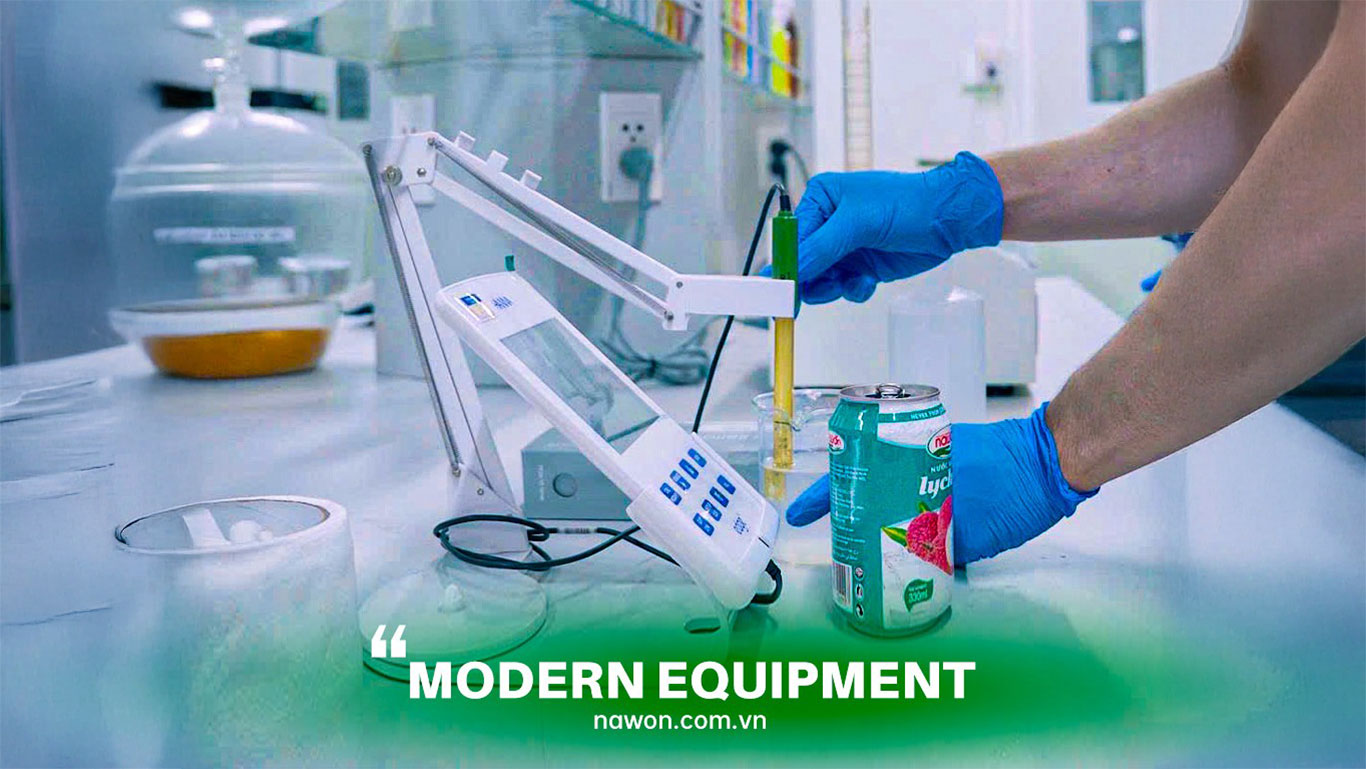
How the beverage manufacturing process works – Modern equipment
Step 3: Thermal Processing & Preservation
Heat treatment kills spoilage organisms and deactivates enzymes. High-acid drinks like tropical juices typically use HTST pasteurization or hot-fill loops. Heat-sensitive drinks like coconut water or plant milks use aseptic processing to protect natural flavors without over-cooking. Carbonated lines run liquid through inline deaeration and cooling before CO2 injection.
Quality Checks, Filling and Batch Traceability
Step 4: High-Speed Filling & Sealing
Clean, sterilized containers move directly into the filling room:
- Aluminum Cans: Nitrogen or inert gas flushing precedes high-speed rotary double-seaming.
- PET & PP Bottles: Hot-filled or aseptically capped with tamper-evident seals.
- Glass Bottles: Filled under thermal shock controls and capped with crown or ROPP closures.
Inline sensors monitor net volume, fill height, and seam dimensions in real time.
Step 5: Inline Quality Control & Batch Traceability
After cooling and container drying, automated coders print batch numbers, production timestamps, and expiration dates on every can or bottle. Representative samples from each batch go to incubation hold (5 to 7 days at ambient and elevated temperatures) to confirm commercial sterility before inventory release.
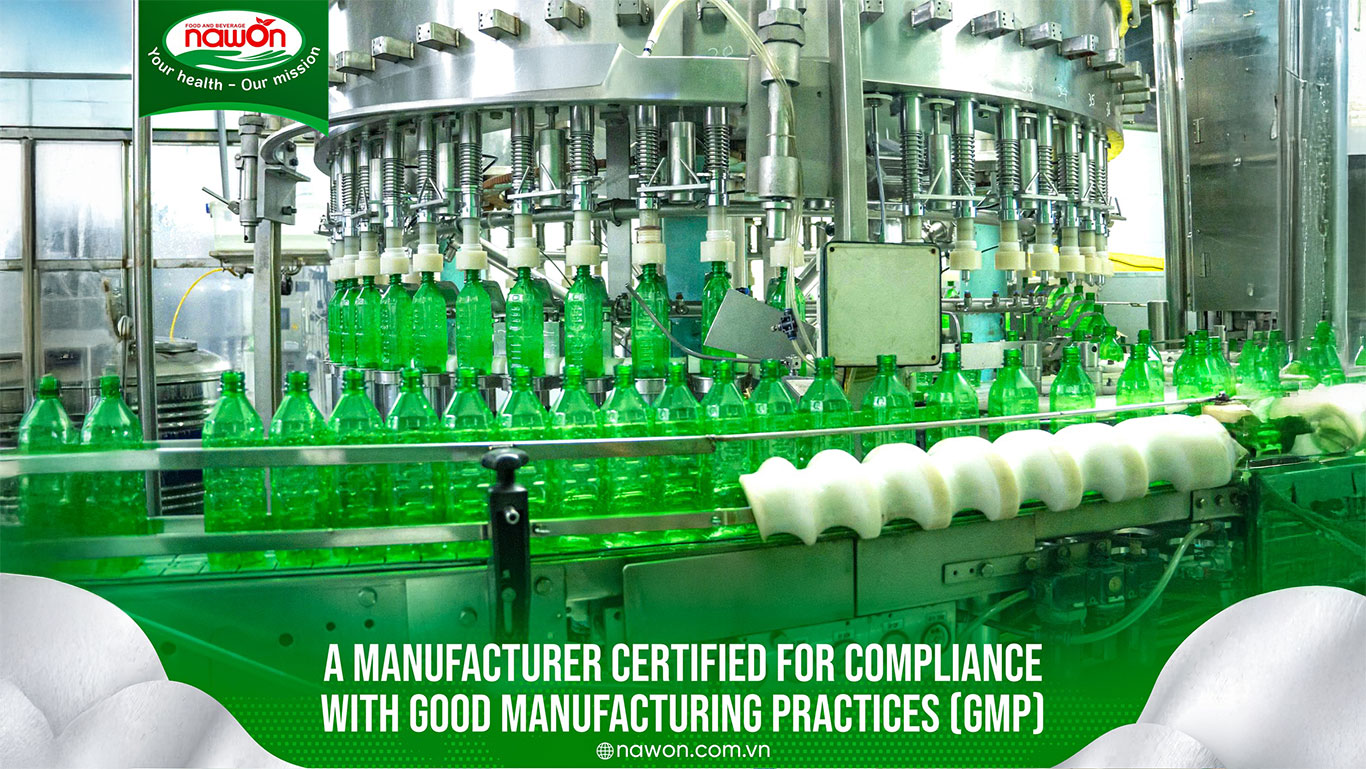
How the beverage manufacturing process works – Nawon F&B
Step 6: Palletization & Export Logistics
Once microbiology tests pass, finished goods are palletized, wrapped, and staged for loading. The factory QA team generates the final batch COA, packing list, commercial invoice, and export phytosanitary documents needed for fast customs clearance.
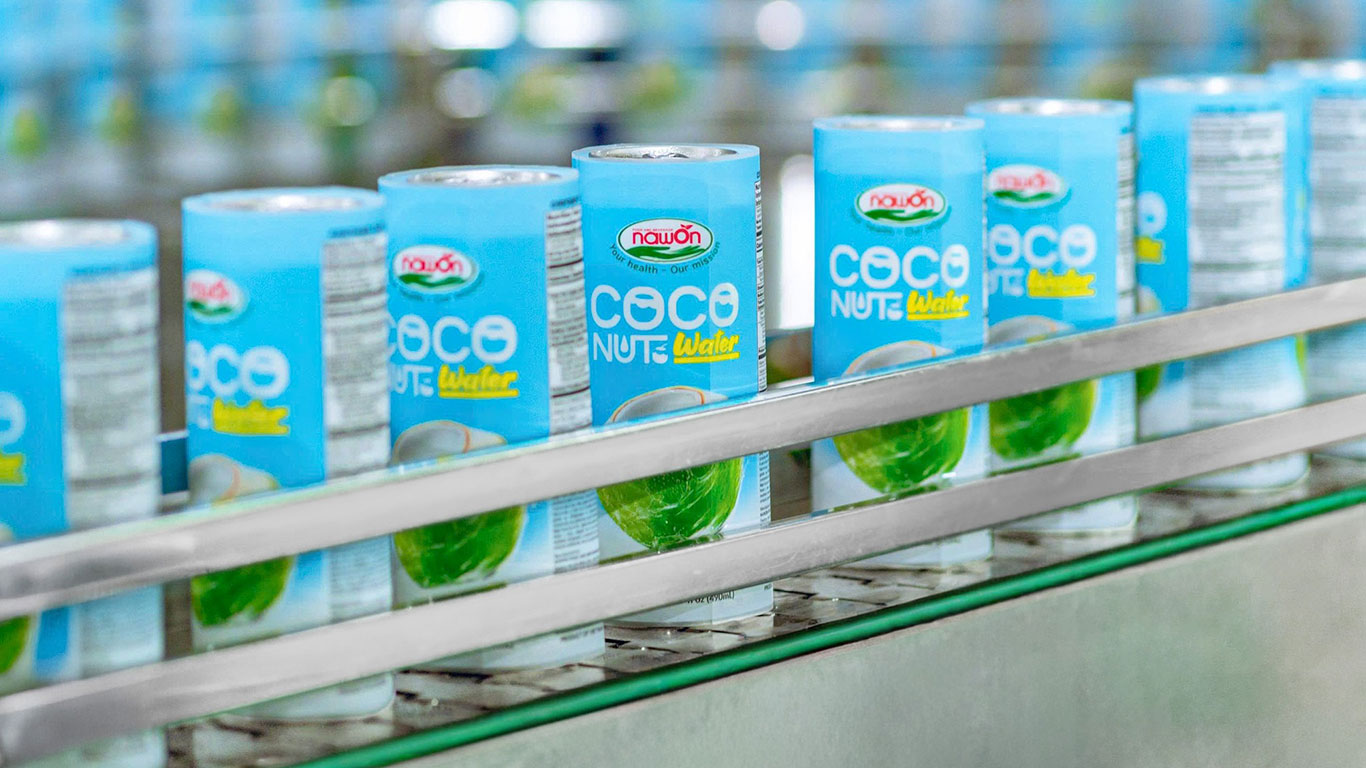
How the beverage manufacturing process works
Production Correlation Matrix for B2B Buyers
Use this matrix to trace how production stages connect directly with quality controls, packaging equipment, and audit documentation:
| Manufacturing Stage | Specification & Control Basis | Processing Line & System | Container & Closure Format | Artwork & Batch Record Reference |
|---|---|---|---|---|
| 1. Raw Material & Blending | Approved Product Spec Sheet, Target Brix ° & pH Range | Stainless Steel Dosing Tanks & High-Shear Agitators | Bulk Ingredient Drums, Aseptic Tote Bags | Raw Material COA Lot Numbers, Batch Mixing Sheet |
| 2. Thermal Preservation | Thermal Profile Target (HTST / Aseptic Hold Time & Temp) | Automated HTST Pasteurizer, Plate/Tubular Heat Exchanger | Sanitary Closed-Loop Piping & Inline Deaerators | Pasteurizer Thermal Chart Records, CCP Monitoring Logs |
| 3. Filling & Sealing | Net Volume, Packaging Spec, Seam/Torque Limits | High-Speed Rotary Can Seamer or Bottle Capping Line | Aluminum Cans (250/330/500ml), PET, Glass, PP Bottles | Approved Artwork Revision ID, Inline Packaging Defect Log |
| 4. Quality Release & Export | Final Product QA Acceptance Spec, Sterility Limits | Incubation Warehouse, Automatic Palletizer | Corrugated Export Cartons, Stretch-Wrapped Pallets | Finished Goods Batch Lot Code, Final Export COA |
What Buyers Should Verify Before Shipment
Before authorizing final container dispatch, procurement managers should run through this quick pre-shipment verification:
- Review Final Batch COA: Check that lab values for Brix, pH, net volume, and microbiology match your contract spec sheet.
- Cross-Check Traceability Codes: Match container lot codes with carton labels and bill of lading documents.
- Verify Artwork & Label Compliance: Ensure nutrition facts, ingredient order, allergen warnings, and barcodes fit target market regulations.
- Audit Factory Credentials: Working with an OEM/ODM partner with verified factory capabilities gives you direct access to ISO 22000, HACCP, FDA, and BRCGS certified testing standards.
(Note: For step-by-step instructions on evaluating batch lab data and release logs, see our guide on reading beverage batch quality-control evidence).