

You grab a bottle of raw coconut water from the fridge, ready for a refreshing drink. But instead of the crystal-clear liquid you’re used to, you see a strange, rosy tint. You might be asking: Why is my coconut water pink? Did it spoil? Is it safe?
Before you throw it away, stop. That pink hue isn’t usually a sign of spoilage. In many minimally processed bottles, it’s simply a natural color shift. While clear liquid is the industry standard for shelf-stable products, pink coconut water is often associated with less processing and a fresher, more coconut-forward taste.
Here is the truth about why your coconut water changes color and how to tell if you have a minimally processed bottle or genuinely bad coconut water.
Why Coconut Water Turns Pink
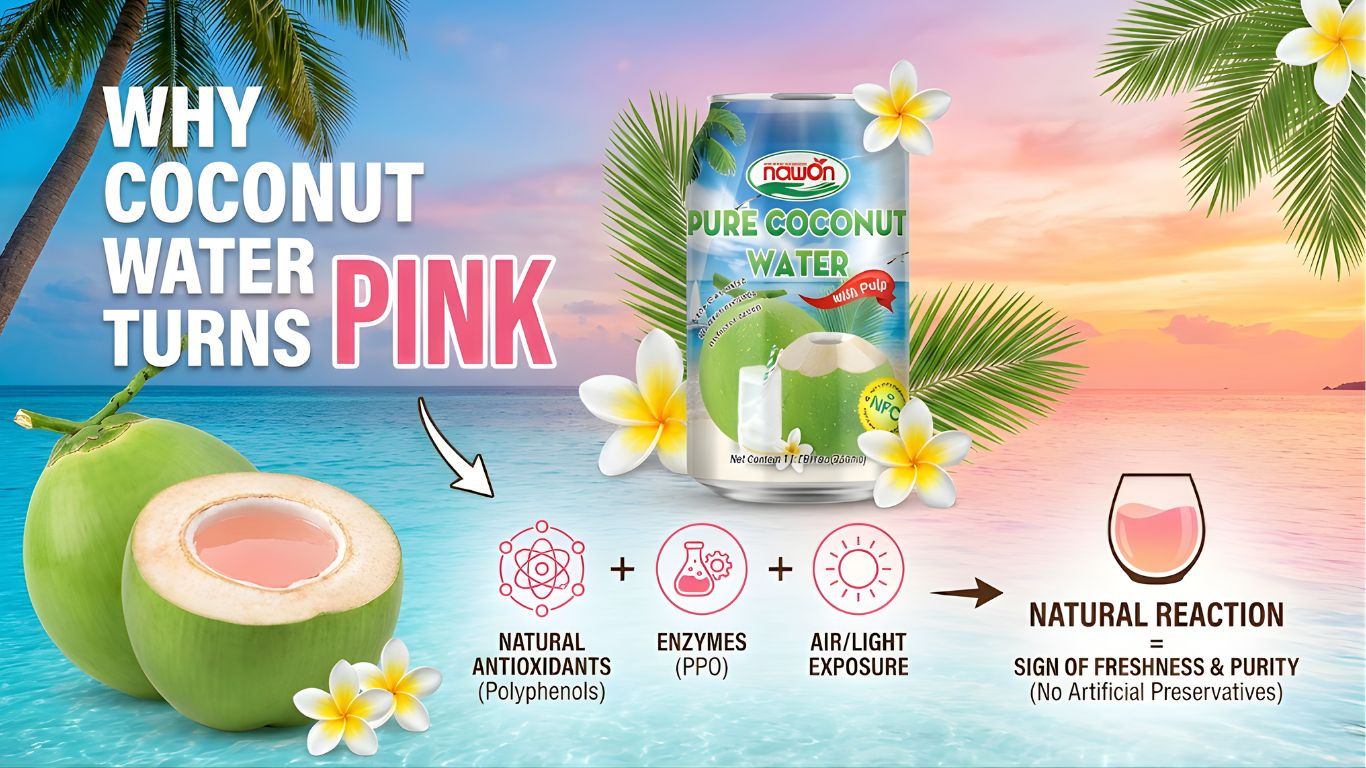
If you’re wondering, “Why is coconut water pink?” the answer comes down to nature, not chemicals. It’s a simple process called Polyphenol Oxidation.
Coconut water is packed with naturally occurring antioxidants called polyphenols. When you crack open a young coconut, these compounds meet two things: light and oxygen.
Over time, these elements interact with the enzymes in the water. This reaction causes the liquid to shift from clear to pink. It’s the same process that makes a sliced apple turn brown after you leave it on the counter.
However, unlike the apple, where browning means it’s getting mushy, this color change in coconut water is harmless. In fact, a distinct pink hue usually indicates high levels of those beneficial antioxidants.
Pink vs Clear Coconut Water
If pink is natural, why is most coconut water at the grocery store clear?
It comes down to processing.
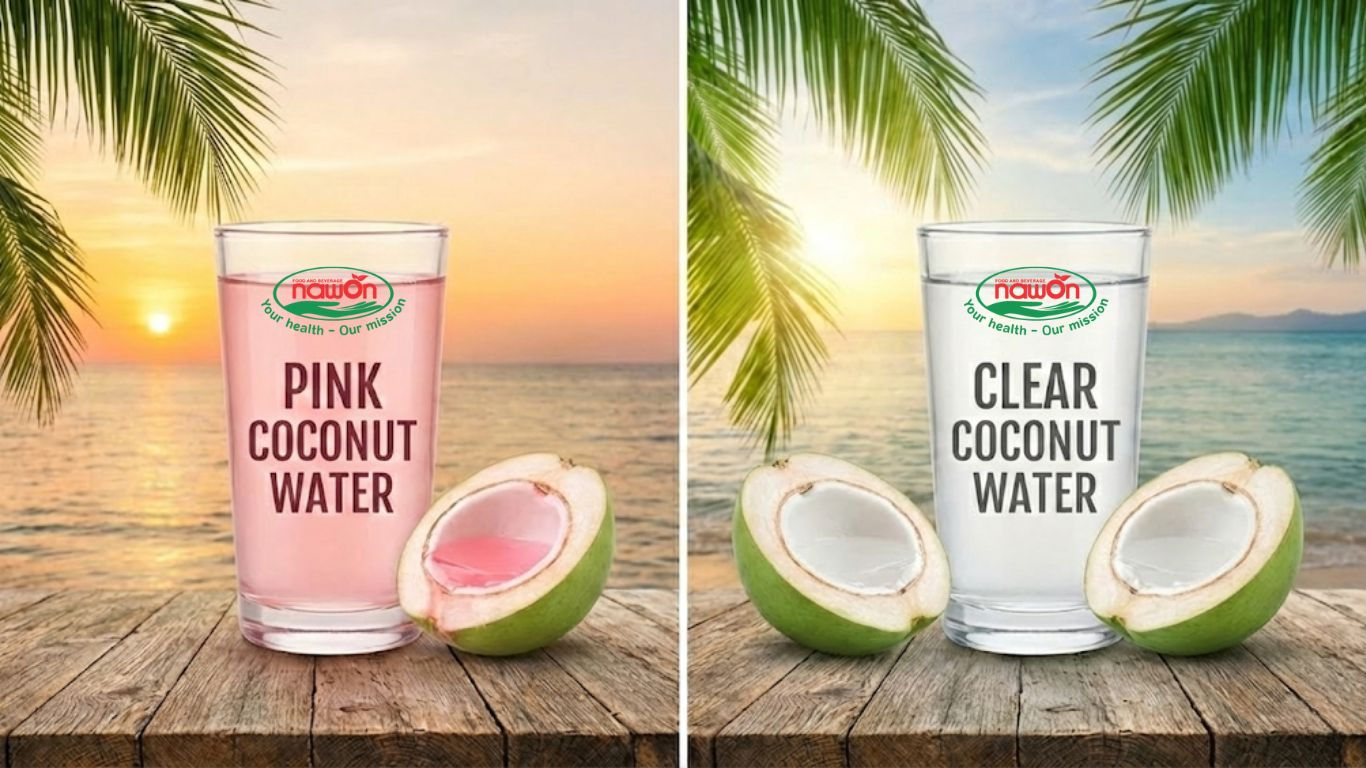
- Clear Coconut Water: To keep the liquid looking “pristine” for months on a shelf, manufacturers often use heavy pasteurization (high heat). This kills the enzymes and stops the oxidation process, but it also lowers the antioxidant levels.
- Pink Coconut Water: This is typically raw or cold-pressed. Because it hasn’t been boiled or heavily treated, the enzymes remain active. The pink color is your visual confirmation that the water is minimally processed and unadulterated.
The Taste Test
The difference isn’t just visual. It’s in the flavor profile.
Heavily processed clear water can taste flat or consistent to a fault. Pink coconut water, on the other hand, tends to be more robust. Because it is closer to the raw nut, it has a “true-to-the-nut” flavor, often slightly sweeter and nuttier than its clear counterparts.
Quick Comparison: Pink vs. Clear Coconut Water
| Feature | Clear Coconut Water | Pink Coconut Water |
|---|---|---|
| Processing | Highly pasteurized or filtered | Raw, Cold-Pressed, Minimal |
| Antioxidants | Lower (often destroyed by heat) | Higher (causes the color change) |
| Taste | Mild, flat, consistent | Robust, sweeter, complex |
| Safety | Safe | Safe (if not fermented) |
How Long Does Pink Coconut Water Last?
Since pink coconut water is often the result of natural oxidation in unpasteurized, organic, or “no-sugar-added” varieties, it behaves differently from the heavily processed clear versions. Because it retains more natural enzymes, it is more sensitive to its environment.
Here is the breakdown of its shelf life and proper storage.
1. Unopened Bottles
- Shelf Life: Generally, unopened pink coconut water can last 6 to 12 months.
- Storage Condition: It must be kept in a cool, dark place away from direct sunlight or heat sources.
- Note: Always check the specific expiration date on the bottle. While the pink hue itself is a safe, natural reaction to light and antioxidants, the seal determines the longevity.
2. After Opening
Once you break the seal, oxygen exposure accelerates the breakdown process.
- Best Quality: For the freshest taste and maximum nutrition, consume the water within 24-48 hours (1–2 days).
- Maximum Limit: While some brands may remain safe to drink for up to 5 days in the fridge, the flavor profile often degrades, losing that signature sweetness.
3. Critical Storage Tips
- Refrigeration is Mandatory: Unlike some shelf-stable juices, once opened, pink coconut water must be refrigerated immediately.
- The “Counter Rule”: Never leave an open bottle out at room temperature. Due to the natural sugars and lack of heavy preservatives, it can spoil within just a few hours if left on the counter.
4. Can You Freeze It?
Yes, freezing is a great way to extend the life of your coconut water.
- How to do it: Pour it into an ice cube tray or a freezer-safe container.
- Thawing: Once you thaw frozen coconut water, consume it immediately. Do not refreeze it or let it sit in the fridge for days after thawing.
How to Spot Bad Coconut Water
While pink is generally safe, you still need to watch out for bad coconut water. Spoilage looks (and smells) very different from natural oxidation.
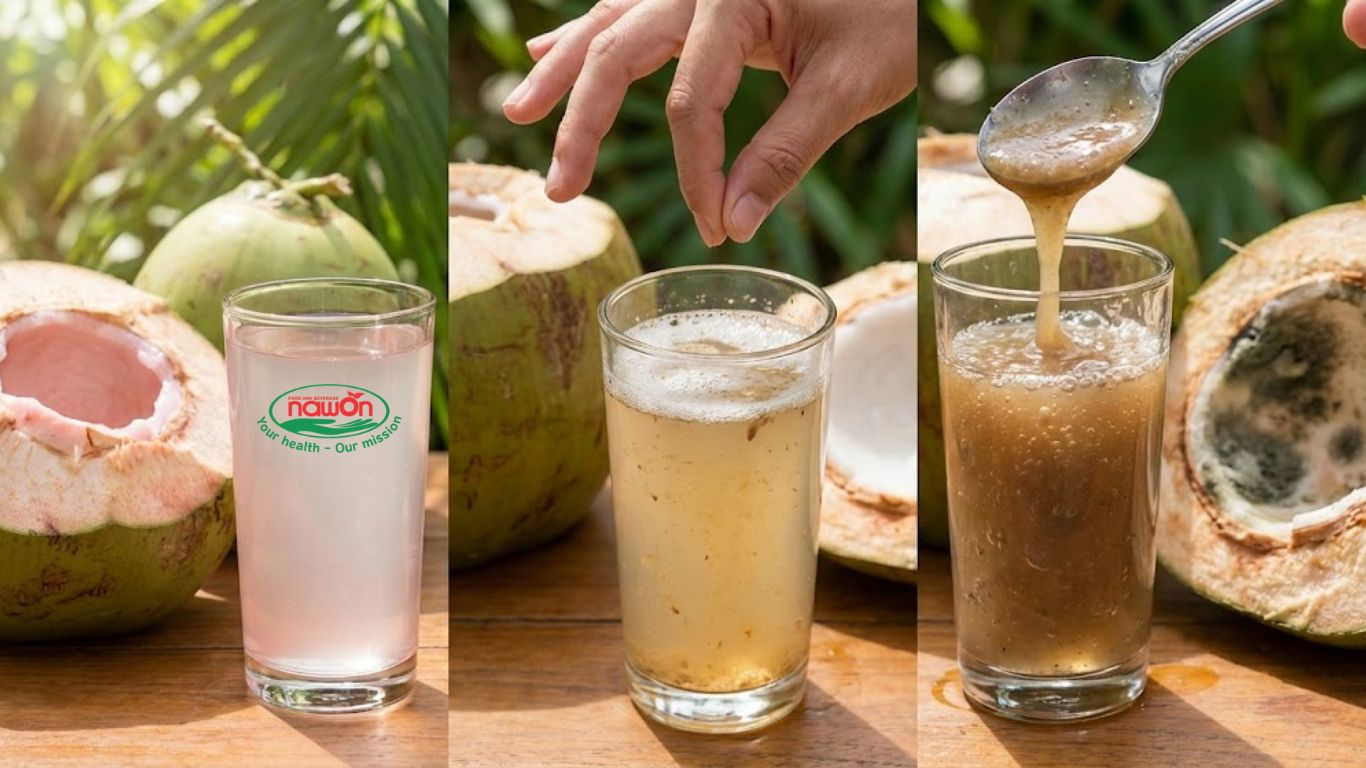
If the coconut water has turned from pink to a murky yellow or brown, be cautious. But your nose and tongue are your best tools here.
Do not drink it if:
- The Smell is Sour: Fresh coconut water smells sweet. If it smells like vinegar or rotten fruit, it’s gone.
- The Texture is Slimy: The liquid should be thin like water. If it’s thick or slimy, toss it.
- It Bubbles or Fizzes: This is the big one. If you take a sip and it fizzes on your tongue like a carbonated soda, it has fermented.
FAQ: Common Questions About Coconut Water Pink
Q: Does pink coconut water taste different?
A: Yes. Because it isn’t boiled, it has a “true-to-the-nut” flavor. It is often sweeter, nuttier, and more complex than the flat taste of clear, pasteurized water.
Q: Can I cook with pink coconut water?
A: Absolutely. You can use it in smoothies, curries, or rice. However, cooking it will destroy the active enzymes (and the pink color might fade), essentially pasteurizing it yourself.
Q: Is pink coconut water safe for pregnancy?
A: Generally, yes. Most commercial pink coconut water undergoes High-Pressure Processing (HPP), which kills harmful pathogens like Salmonella and E. coli while preserving nutrients. However, always check the label. If it is “unpasteurized” and not HPP-treated, consult your doctor first.
So, Should You Drink Coconut Water Pink?
If your coconut water turns pink in the fridge, don’t panic. You are simply witnessing a natural, healthy process. It means you bought a product high in antioxidants that wasn’t boiled into submission.