
Food and Beverage Certifications have become essential for businesses in the rapidly growing beverage industry to establish credibility and qualify for international export. These prestigious certifications serve as proof of product quality, safety, and sustainability, acting as a commercial passport that enables companies to access demanding markets and build trust with global partners. To strengthen your position and expand export potential, explore the Top 5 leading Food and Beverage Certifications that empower businesses to reach the world.
ISO – International Organization for Standardization
About ISO
ISO (International Organization for Standardization) was founded in 1947 in Geneva (Switzerland) and is currently the world’s largest standardization organization, with more than 160 member countries.
ISO issues thousands of international standards for all fields, but in the food & beverage industry, ISO 22000 is the most prominent food safety management system certification. ISO 22000 combines and supplements the core elements of ISO 9001 and HACCP to provide a framework for developing, implementing, monitoring, and continuously improving a Food Safety Management System (FSMS).
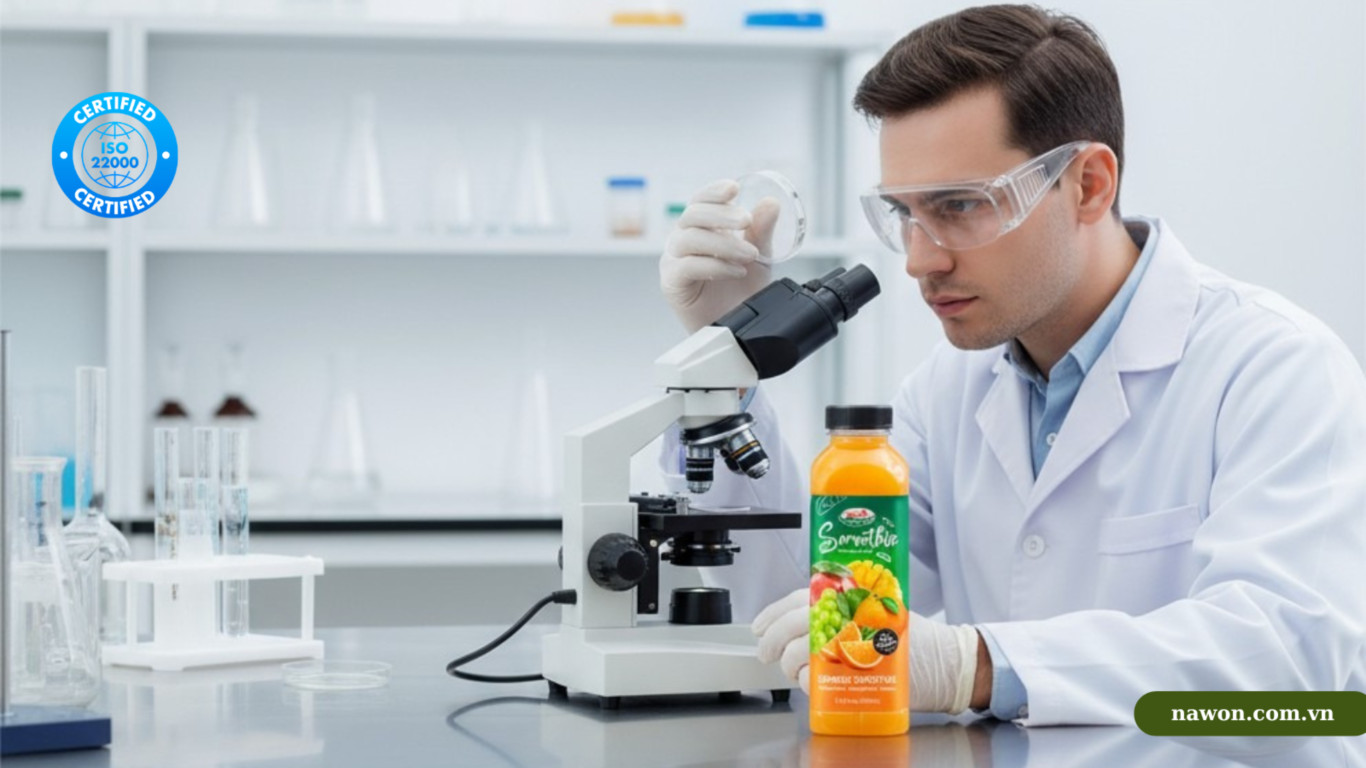
What does ISO 22000 bring to F&B businesses?
Establish a comprehensive control system from raw material procurement, production, storage, packaging, to distribution.
Helps businesses meet HACCP and GMP requirements simultaneously, ensuring consistency and clear traceability.
Enhances reputation and reliability with customers, especially foreign partners.
It is an integrated platform with other management systems, such as ISO 9001 (quality) and ISO 14001 (environment).
Why is ISO 22000 called a “global passport”?
This certification is recognized in most countries around the world.
When a business meets ISO 22000 standards, it can export products to major markets such as Europe, the US, Japan, and the Middle East without re-establishing food safety procedures.
HACCP – Hazard analysis and critical control points
What is the concept of HACCP?
HACCP (Hazard Analysis and Critical Control Points) means hazard analysis and critical control points. HACCP standards are a quality management system standard for food safety. Based on the study and control of hazards and essential points of the production and processing of food in the enterprise.
Rather than just testing the product after it’s finished, HACCP helps identify and prevent risks early in the manufacturing process. Whether you’re looking to source branded products or produce private label beverages, HACCP is a solution your supplier must have in place before you start working with them.
See more: Private Label Beverage For Your Business, Pros And Cons?
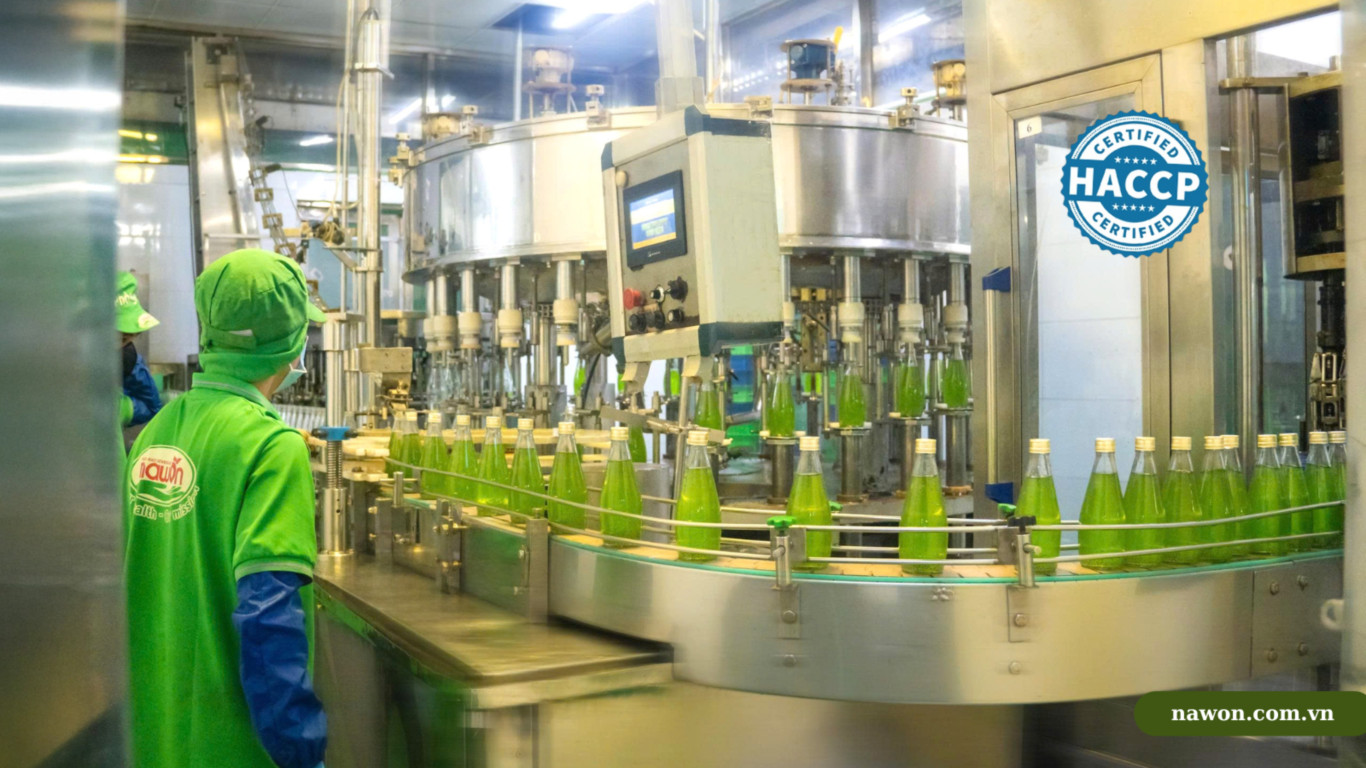
Main principles of HACCP
HACCP is based on seven core principles, including:
- Hazard analysis.
- Identify critical control points (CCP).
- Establish control limits.
- Monitor CCPs.
- Take corrective action when there is a deviation.
- Establish verification procedures.
- Keep records and documents.
Benefits of HACCP certification
Helps beverage manufacturer businesses prevent food safety incidents instead of dealing with the consequences.
Required in many markets such as the EU, Japan, and the United States.
Creates strong trust with consumers and import partners.
It is an important stepping stone to achieving higher-level certifications such as ISO 22000 or FSSC 22000.
BRCGS – Global Standard for Food Safety
Introduction
The BRC Global Standard for Food Safety was established by the British Retail Consortium (BRC) in 1998 to ensure food safety and quality management standards in the UK and the international food retail and supply industry.
Like other certifications, such as HACCP and GMP, BRCGS ensures that food products are produced and supplied to meet safety and quality standards. Businesses seeking BRCGS certification need to comply with the requirements set out in the BRCGS standard, which includes requirements for quality management, factory hygiene, raw material and production control, employee training, and product storage.
BRCGS certification typically applies to both specific products and manufacturing facilities. For a particular product, BRCGS certification proves that the product meets BRCGS standards. BRCGS certification proves that its production and operations comply with BRCGS requirements for a manufacturing facility.
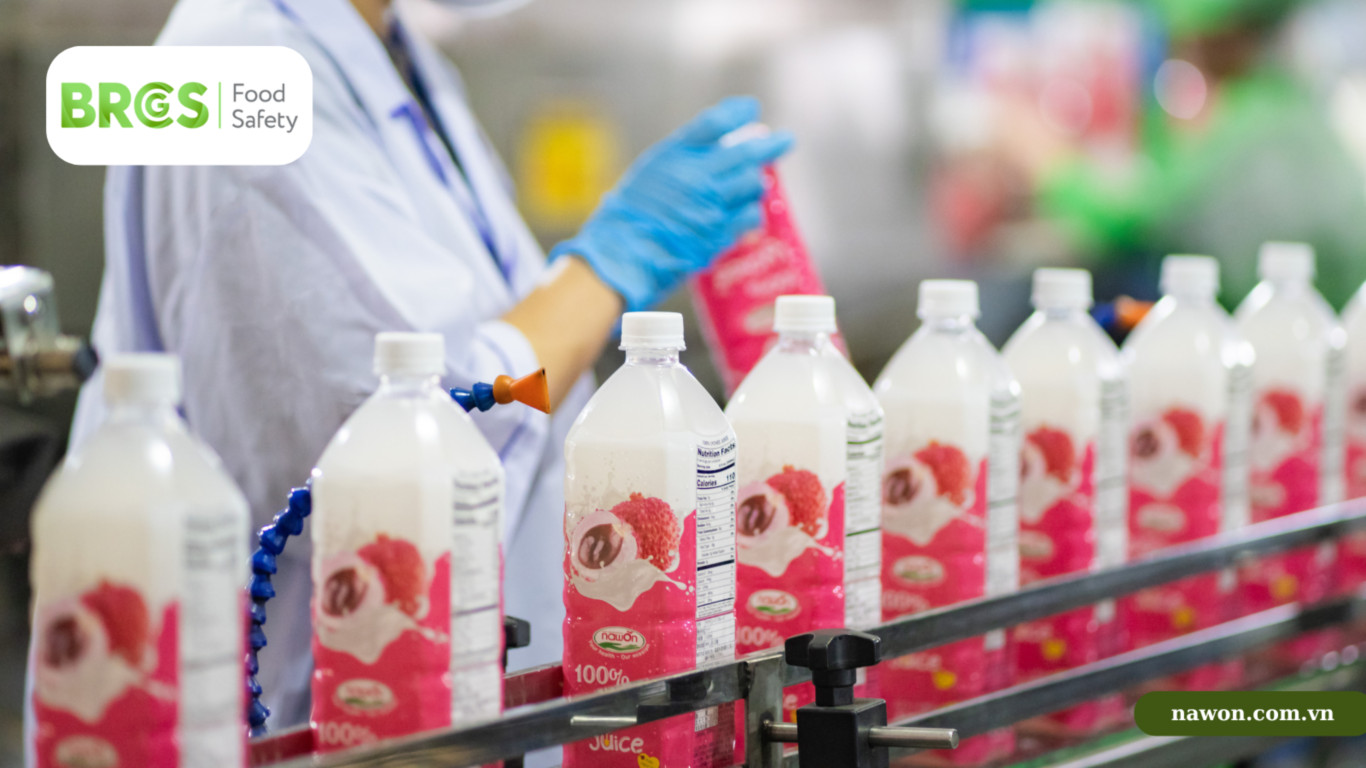
The BRCGS Difference
Assessment concerns food safety, business ethics, working environment, and social responsibility.
The entire process covers raw materials, factory, human resources, operations, and the final product.
Recognized and required in supply contracts by major retail chains such as Tesco, Sainsbury’s, Carrefour, and Aldi.
Practical benefits
Enhance brand reputation by complying with global standards.
Increase export capacity and expand to European markets.
Help businesses optimize internal quality control processes and reduce the risk of product recalls.
FSSC 22000 – Comprehensive & GFSI accredited certification system
Introduction
FSSC 22000 (Food Safety System Certification) is one of the most widely recognized certification systems by the Global Food Safety Initiative (GFSI) – a global organization for food safety.
This certification is developed based on ISO 22000 and additional standards such as ISO/TS 22002 – 1, forming a more comprehensive and rigorous assessment system.

Benefits of achieving FSSC 22000
Recognized by more than 160 countries, helping businesses standardize the entire food safety management system, from raw materials to finished products.
Support quick product traceability, minimizing the risk of media crises.
Improve business image in the eyes of international partners and consumers.
Who is FSSC 22000 suitable for?
Large-scale manufacturing enterprises, aiming at global supply chains.
Factories wanting to export products to Europe, the US, Japan, or the Middle East.
Brands want to affirm their capacity and commitment to sustainable quality.
FDA – US Food & Drug administration
What is the FDA?
The FDA (Food and Drug Administration) is an agency under the US Department of Health, responsible for monitoring and approving all food, pharmaceutical, cosmetic, and beverage products imported into the US market.
This is one of the most challenging certifications due to stringent ingredients, processes, packaging, labeling, and product testing requirements.
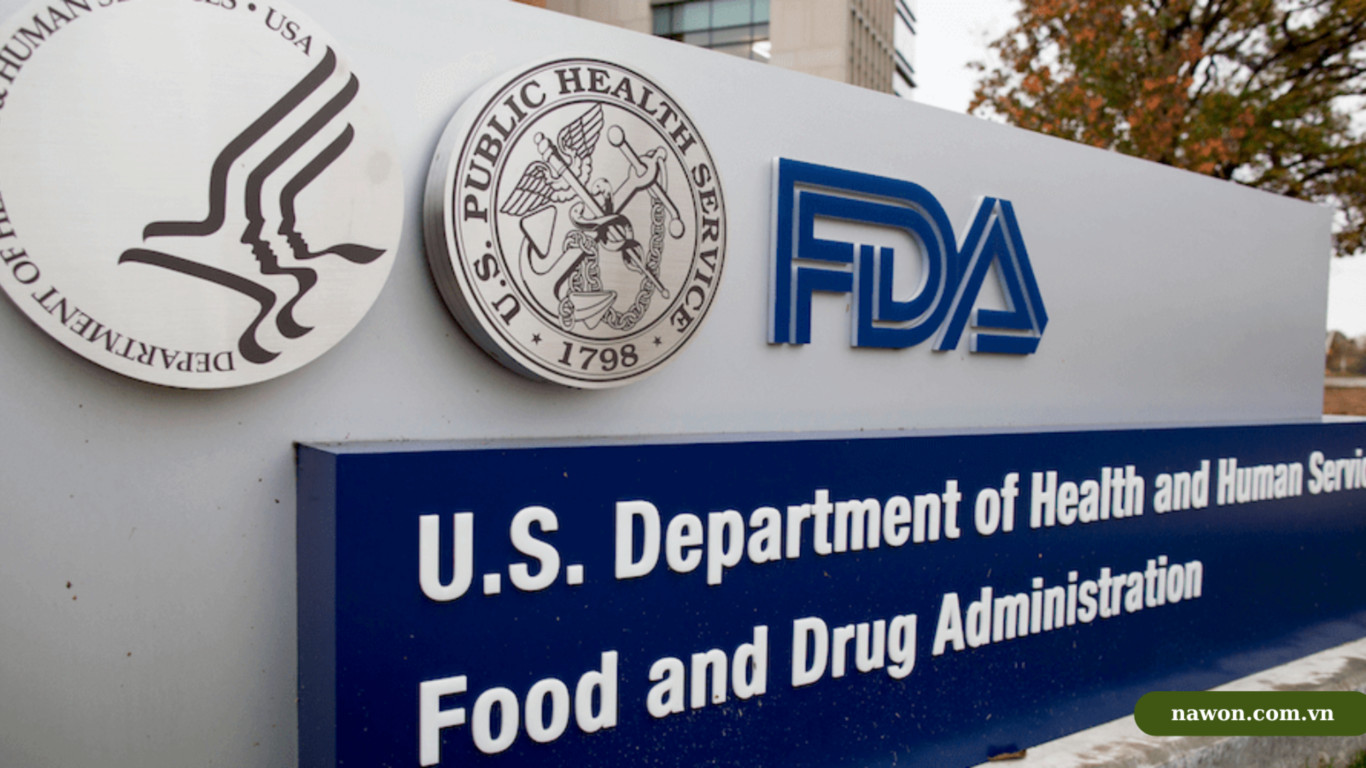
Why is FDA certification necessary for exporting businesses?
The US is one of the most demanding markets in the world, with strict requirements on ingredients, labels, packaging, and production processes.
Products are only allowed to be legally imported, distributed, or circulated when registered and approved by the FDA.
FDA certification is a “passport” to the US and a strong proof of quality, helping businesses expand to other developed markets such as Canada, Australia, Singapore…
What benefits will businesses with FDA certification gain?
Increase global brand reputation.
Get priority in cooperation with partners, distributors, and supermarket chains.
Reduce the risk of product recall or import ban.
Contribute to building a transparent, professional, and trustworthy business image.
Food and Beverage Certifications, such as ISO 22000, HACCP, BRCGS, FSSC 22000, and FDA, play a vital role in ensuring product safety, maintaining consistent quality, and strengthening business reputation across the global food and beverage industry. Holding these internationally recognized certifications enables companies to comply with global standards, expand export potential, foster sustainable partnerships, and confidently affirm their position in the competitive international market.