

Walk into any grocery store, and you’ll see bottles labeled coconut water, coconut juice, and sometimes coconut water with pulp. Many people use ‘coconut juice’ and ‘coconut water’ interchangeably.
Here’s the clean way to think about it:
- Coconut water is the clear liquid naturally found inside young green coconuts.
- “Coconut juice“ can refer to the same liquid or to a branded, processed drink that includes pulp, sweeteners, flavors, or blends, depending on the product and the country.
However, the word ‘juice’ isn’t always a warning sign. Under U.S. FDA standards, even pure coconut water is technically classified as a fruit juice.
Quick definitions
Coconut water
- Comes from the center of young coconuts
- Naturally low in calories
- Electrolyte-rich (especially potassium)
- Tastes light, mildly sweet, and “clean.”
Nutrition varies by brand and processing, but USDA-listed values commonly land around ~46 calories per 1 cup (240g) for unsweetened coconut water.
Coconut juice
“Coconut juice” can show up in a few ways:
- A casual synonym for coconut water (especially in cafés, travel settings, or everyday speech).
- A product name used by brands for a coconut drink that may include pulp or an added sweetener.
- A blended coconut beverage (coconut water + fruit juice, flavorings, or concentrates).
Some major brands even separate their own lineup into “coconut water” vs. “coconut juice” versions.
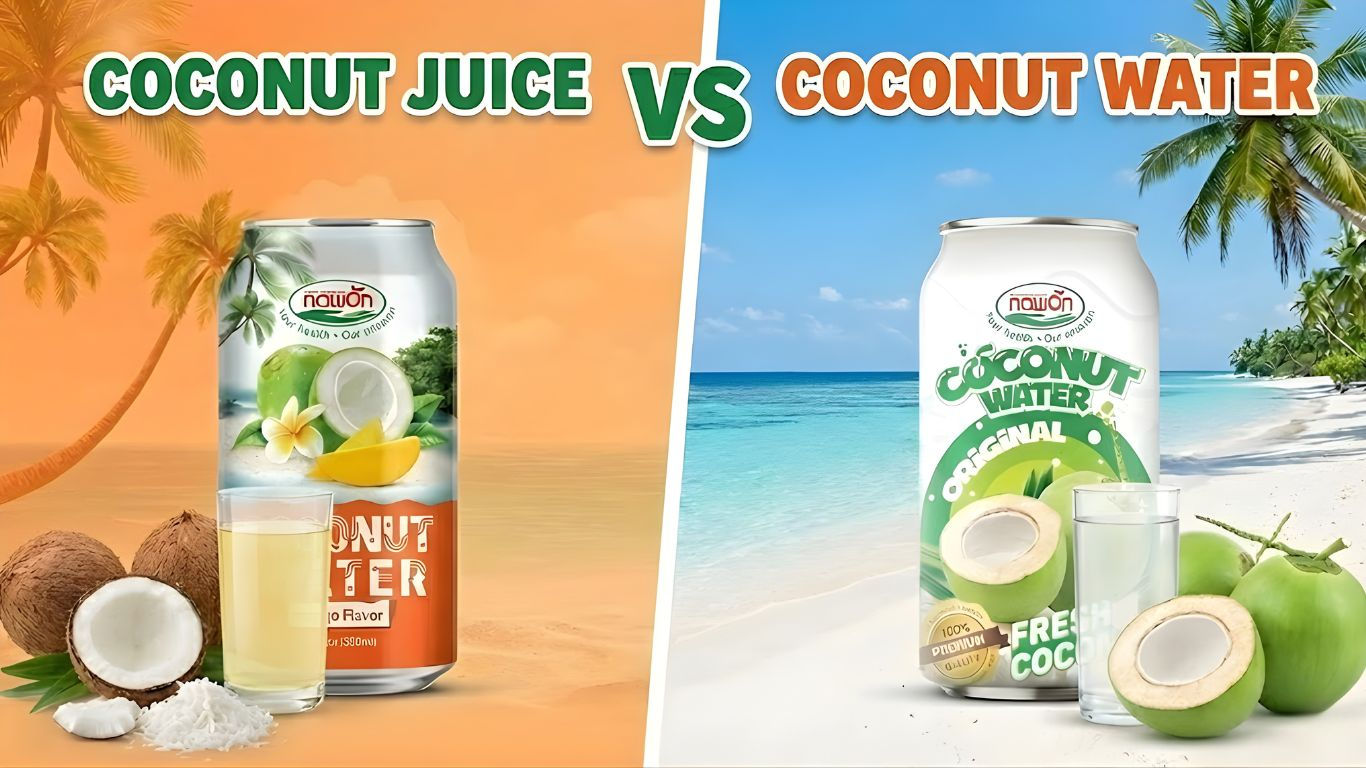
Coconut juice vs coconut water: side-by-side comparison
| Feature | Coconut water (100%) | “Coconut juice” |
|---|---|---|
| What it is | Natural liquid from young coconuts | Coconut drink that may include pulp, sweeteners, flavors, or blends |
| Ingredient list | Ideally: “coconut water” only | Often: coconut water + pulp and/or sugar and/or flavor |
| Sugar level | Naturally occurring sugar (usually modest) | Can be noticeably higher if sweetened or blended |
| Taste | Light, slightly sweet, nutty | Sweeter, thicker, sometimes fruity |
| Best use | Everyday hydration, light post-workout | “Treat” drink, flavor-first option, smoothies, mixing |
The “Juice” Label Confusion
In many shoppers’ minds, “juice” = “sweet.” That’s true of orange, apple, and grape juices, and most juices; they’re naturally higher in sugar.
But coconut is a weird one.
- Coconut water is naturally a clear liquid, not squeezed from pulp like typical fruit juice.
- At the same time, coconut-derived liquids can still be treated as “juice” under specific U.S. food safety rules, which is why you’ll see “juice” used in industry language.
So the label word alone doesn’t tell you much. The ingredients and nutrition panel do.
Nutritional Breakdown: What’s Inside the Bottle?
Coconut water nutrition
Coconut water is mostly water and carbs, with minerals that matter for hydration. Cleveland Clinic notes it contains electrolytes like potassium, sodium, and magnesium, and is generally low in calories (often around 40–60 calories per 8 oz, depending on brand).
USDA-style entries commonly show numbers like:
- 46 calories per 1 cup (240g)
- Potassium around 600 mg (varies by source/brand)
What happens when it’s “coconut juice.”
If the bottle includes any of the following, the nutrition profile can shift fast:
- Added sugar (even small amounts add up)
- Fruit juice blends (pineapple/mango mixes are standard)
- Pulp (adds texture; may slightly change carbs/fiber depending on quantity)
One brand example: some companies describe their “coconut juice” as a variation that includes pulp and may consist of added fruit sugar in certain products.
The Difference in Taste and Texture
Pure coconut water is usually:
- light
- mildly sweet
- a little nutty
- sometimes slightly salty
“Coconut juice” products may taste:
- sweeter and more candy-like
- thicker (if pulp is present)
- fruit-forward
That’s not automatically bad, just different goals.
Picking the Right Drink for Your Goals
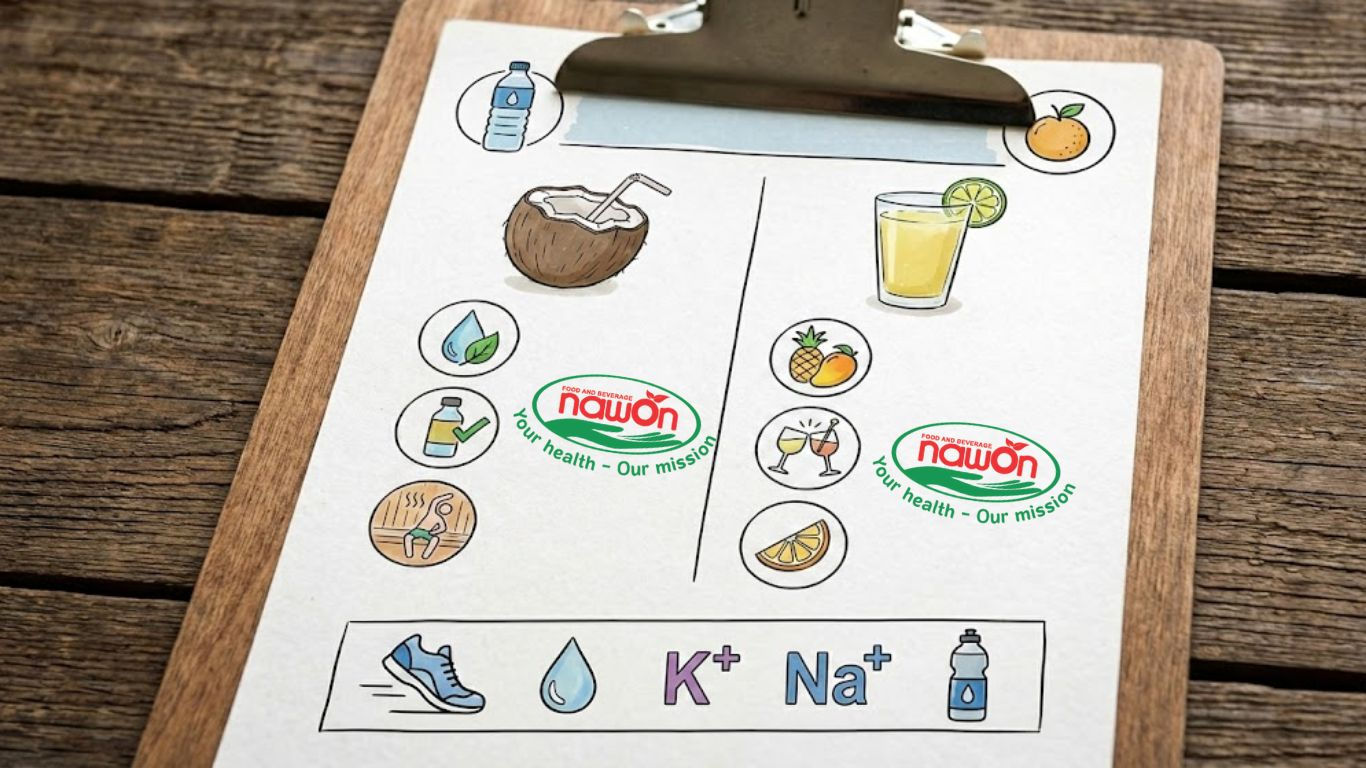
Pick coconut water if you want:
- a clean hydration drink
- a low-calorie alternative to soda
- something to sip after a walk, sauna, light workout, or hot day
Pick “coconut juice” if you want:
- more flavor and sweetness
- a mixer for mocktails
- something closer to a fruit drink than a hydration drink
After hard workouts
Coconut water is known for its potassium content, but heavy sweating also leads to sodium loss. Some reports have noted that coconut water can be relatively low in sodium compared with many sports drinks, which matters during intense training sessions.
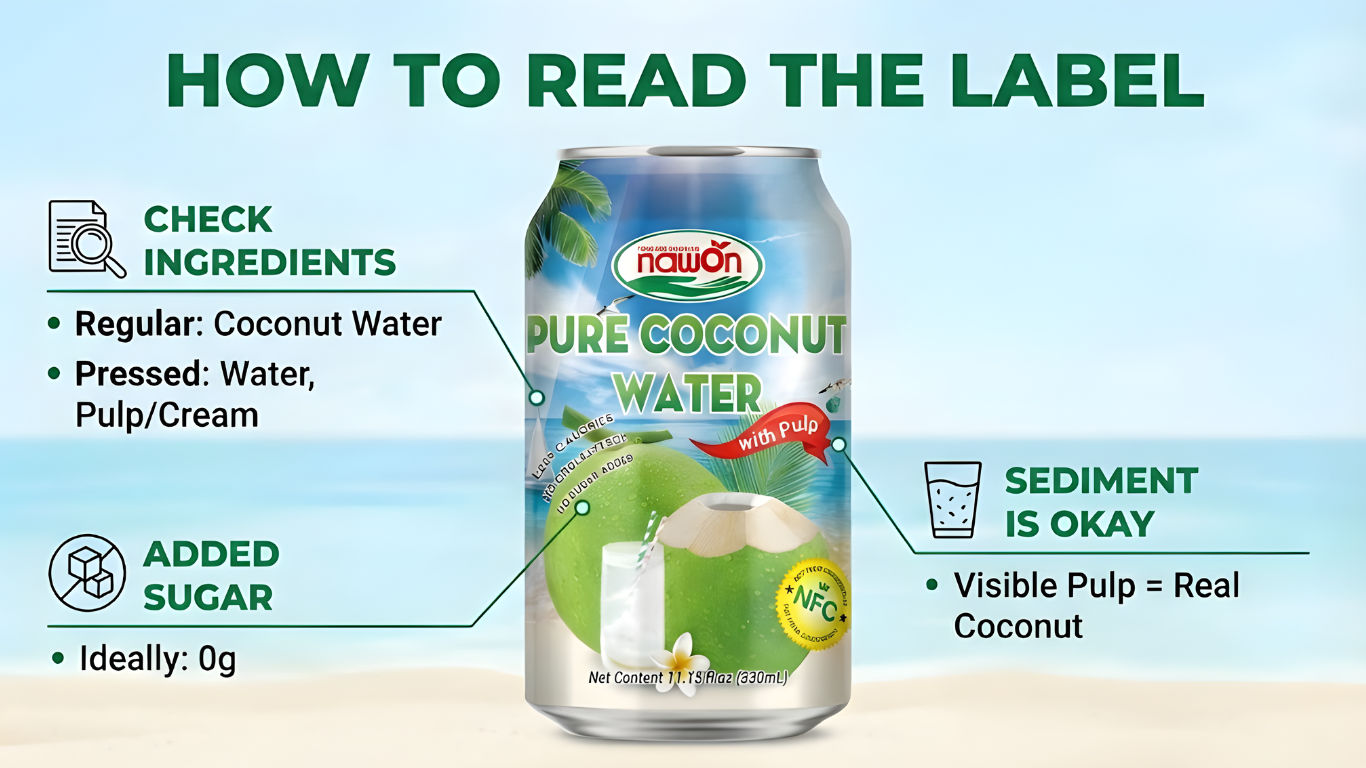
How to shop smart: a 10-second checklist
Grab the bottle and check:
- Ingredients
- Best case: coconut water
- If you see: sugar, syrup, “juice blend,” flavors → it’s not the pure thing
- Added sugars line
- If it lists added sugars, you’re in “coconut drink” territory
- “From concentrate”
- Not always bad, but it can affect taste and sometimes signal more processing
- Pulp
- Fine if you like texture, but it’s a different experience than clean coconut water
FAQ: coconut juice vs coconut water
Is coconut juice the same as coconut water?
Sometimes. In everyday speech, people use them interchangeably. On packaged products, “coconut juice” may mean a coconut drink with pulp or added sweetness, so check the label.
Which is better for hydration?
If it’s 100% coconut water, it’s a solid hydration option with electrolytes like potassium, sodium, and magnesium.
If it’s sweetened “coconut juice,” it may still hydrate, but it’s more of a flavored beverage than a clean electrolyte drink.
Which has more sugar?
Usually, products labeled “juice” can contain more sugar if they’re sweetened or blended. The only way to know is to look at the added sugars line and the ingredient list.
Is coconut milk a better option than coconut water?
Not for hydration. Coconut milk is a cooking and smoothie ingredient; it is higher in fat and calories, and serves a totally different purpose.
The Bottom Line
When comparing Coconut Juice vs Coconut Water, the rule of thumb is simple:
- Coconut Water is for function. It’s your electrolyte-packed, low-calorie hydrator.
- Coconut Juice is for fun. It’s your sweet, textured treat or cocktail mixer.
Always treat “Coconut Juice” as a vague category, not a guarantee of purity. The only way to know for sure is to ignore the front label, flip the bottle over, and read the ingredient list.