

1. Introduction: Understanding the Types of Beverage Manufacturers
Navigating the global beverage supply chain requires brand owners, retail buyers, and importers to understand the different types of beverage manufacturers. Selecting the right production partner depends on working scope rather than rigid factory labels. When sourcing fruit juices, coconut water, RTD teas, or energy drinks, buyers must align their internal capabilities with the operational support offered by a facility.
Broadly speaking, commercial beverage production partners operate across three primary service scopes:
- Full-Service Turnkey Manufacturing (Formulation + Sourcing + Filling): Partners that co-develop beverage formulas from concept, source raw ingredients, handle thermal processing, and deliver market-ready packaged goods.
- Contract Execution & OEM Production (Client Formula + Factory Execution): Partners that execute locked client recipes, utilizing established factory lines, quality control systems, and container packaging assets.
- Contract Bottling & Toll Filling (Liquid Bulk + High-Speed Packaging): Partners focused purely on high-speed filling and seaming/capping of client-supplied bulk liquids or pre-mixed liquid bases.
It is important to note that these three models represent operational scopes rather than mutually exclusive factory classifications. In practice, established manufacturing facilities often operate hybrid models—offering full turnkey ODM services for new brand launches while executing high-volume OEM contract runs for established international brands.

You may want to read: How the Beverage Manufacturing Process Works
2. Compare Service Scopes for Different Types of Beverage Manufacturers
To assist procurement teams and brand managers in auditing supplier compatibility, the matrix below outlines the division of responsibilities, required buyer inputs, and operational scope across the primary types of beverage manufacturers:
| Manufacturing Model | Operational Scope & Factory Deliverables | Required Buyer Inputs | Primary Client Responsibilities |
|---|---|---|---|
| Full-Service Turnkey (ODM) | Formula R&D, flavor matching, ingredient sourcing, thermal processing, primary/secondary filling, COA laboratory testing, export documentation. | Product vision, target flavor profile, Brix/pH preferences, destination market regulations, target unit price. | Sample sign-off, label artwork approval, compliance review for destination market. |
| Contract Production (OEM) | Raw material intake screening, batch mixing, pasteurization/sterilization, high-speed container filling, batch coding, quality release. | Locked master formula, detailed Brix/pH specification sheet, approved raw material supplier list, artwork files. | Recipe ownership, initial pilot trial sign-off, quality audit against master specification. |
| Contract Bottling & Toll Filling | Bulk liquid receiving, inline filtration/pasteurization, container filling, double-seaming/capping, sleeve labeling, palletization. | Pre-mixed liquid base or bulk concentrate, packaging containers/labels, exact filling speed & torque specs. | Supply chain logistics for bulk liquid delivery, packaging material QA, bulk liquid shelf-stability. |
Evaluating these models helps brand owners identify their exact operational needs. Brand owners looking to launch new beverage lines can explore private label beverage options to review pre-formulated, market-tested liquid bases that accelerate time-to-market.
3. Evaluating Manufacturing Models for Brand Development
Selecting among the available types of beverage manufacturers depends on your internal technical expertise, capital allocation, and supply chain maturity:
3.1. Full-Service Turnkey Manufacturing
Turnkey manufacturing is ideal for brand owners, distributors, and retailers entering a new beverage category without in-house food scientists or liquid processing facilities. The factory’s R&D team formulates the drink, balances Brix-to-acid ratios, conducts shelf-life stability testing, and manages bulk ingredient procurement. This turnkey approach reduces technical risk and trial-and-error costs during product development.
3.2. Contract Production & OEM Execution
For established beverage brands with proprietary or strictly controlled formulas, contract manufacturing provides scalable production capacity without requiring multi-million dollar factory investments. Under a contract model, the client retains full formula ownership while leveraging certified processing lines (ISO 22000, HACCP, BRCGS, US FDA) and high-speed filling equipment. Companies seeking dedicated contract production can inspect OEM beverage manufacturing capabilities to evaluate factory line speeds, thermal options, and container formats.
3.3. Contract Bottling & Toll Filling
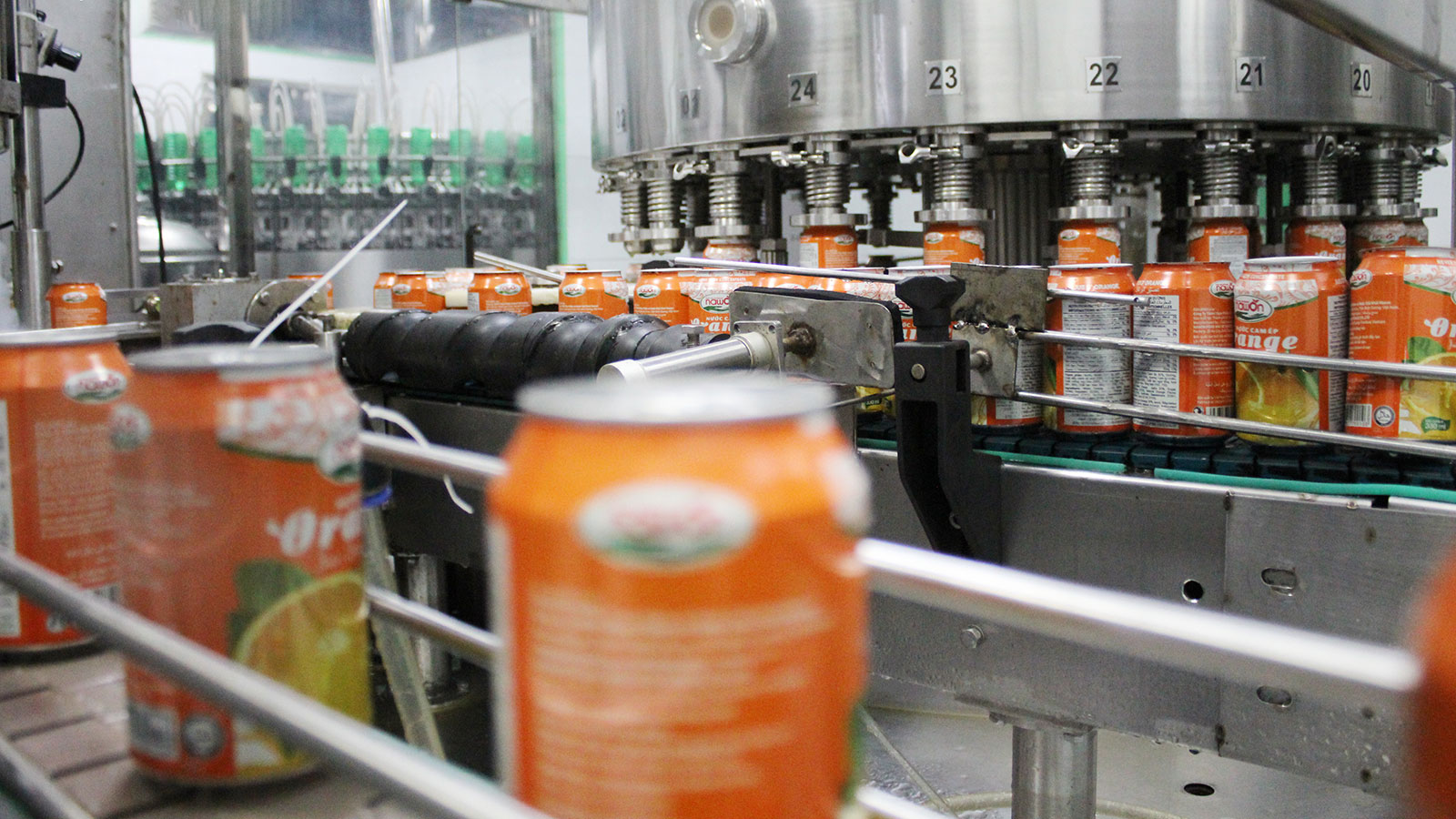
Contract bottling (also known as co-packing or toll filling) serves high-volume beverage companies that manufacture their own concentrate, syrup, or liquid base in-house and require regional filling facilities. The co-packer provides physical filling lines, rotary seamers, pasteurizers, and labor to package bulk liquid into aluminum cans, PET bottles, glass bottles, or aseptic cartons.
4. How Buyers Choose Among Types of Beverage Manufacturers
Rather than assuming every factory fits a single rigid category, commercial buyers should evaluate potential manufacturing partners against four objective criteria:
4.1. Thermal Processing & Filling Compatibility
Ensure the factory operates thermal equipment matched to your liquid type. High-acid fruit juices require HTST pasteurization, low-acid plant milks or coconut water require aseptic filling, and carbonated soft drinks require cold carbonation loops.
4.2. Packaging Format Versatility
Verify that the facility supports your required container formats (such as 250ml, 330ml, or 500ml aluminum cans, PET bottles, glass, or PP bottles) with inline quality monitoring for seam integrity and torque tolerances.
4.3. International Certification & Audit Evidence
Audit the supplier’s quality management credentials. Ensure active BRCGS (Grade A), FSSC 22000, ISO 22000, Halal, or US FDA facility registrations match your destination market regulations.
4.4. Batch Traceability & Quality Control
Confirm that the manufacturer executes strict raw material intake testing, incubation hold protocols (5 to 7 days), and issues comprehensive Certificates of Analysis (COA) prior to shipping container dispatch.