


1. Introduction: What Is the Difference Between Juice and Nectar?
When evaluating fruit beverage options for commercial distribution, wholesale import, or private label contract manufacturing, understanding the exact distinction between fruit juice and fruit nectar is essential for product formulation, pricing, and regulatory compliance.
- Fruit Juice (100% Juice): Refers to the liquid naturally contained in fruit tissue, obtained solely by mechanical extraction (Not-From-Concentrate / NFC) or reconstituted from concentrated pure fruit juice with potable water. Under international food standards such as Codex Standard CXS 247-2005, US FDA 21 CFR 101.30, and EU Directive 2001/112/EC, 100% fruit juice contains 100% pure fruit content with no added water (beyond reconstitution requirements) and no added sugars.
- Fruit Nectar: Refers to an unfermented beverage produced by blending fruit juice, fruit puree, concentrated fruit juice, or a mixture of these with potable water, with or without the addition of nutritive sugars (sucrose, glucose, fructose, honey), non-caloric sweeteners, or natural acidulants (citric acid, malic acid). The fruit juice content in fruit nectar typically ranges between 25% and 50% minimum, depending on the fruit species and destination market regulations.
Directly answering the core buyer question: The primary difference between fruit juice and fruit nectar lies in the fruit juice percentage, added water, added sweeteners, and regulatory label definitions. While 100% fruit juice contains purely extracted or reconstituted fruit liquid without added sugars, fruit nectar is a formulated beverage diluted with water and sweetened to optimize mouthfeel, acidity, and flavor profile — especially for thick or highly acidic tropical fruits like mango, soursop, pink guava, and passion fruit.
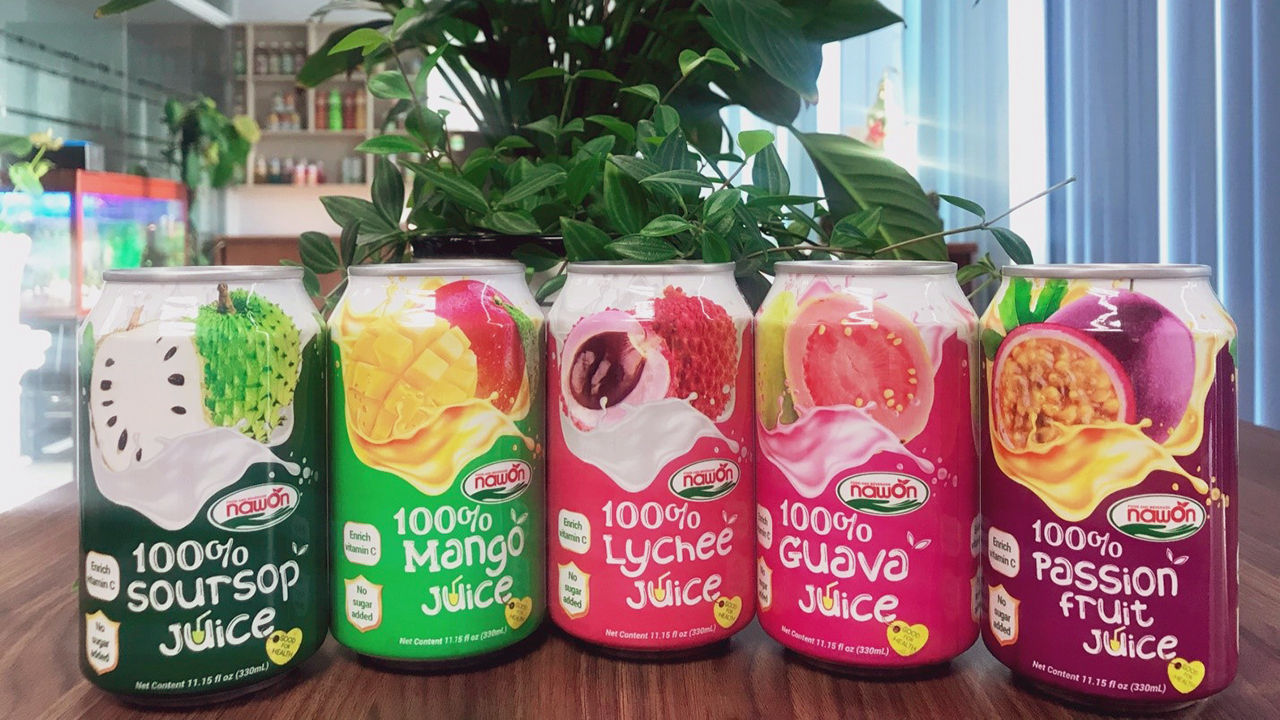
2. Compare Ingredients, Processing, Texture, and Product Labels
To assist commercial buyers, brand owners, and importers in auditing product specifications and selecting raw material benchmarks, the table below outlines the core parameters distinguishing 100% Fruit Juice from Fruit Nectar:
| Technical Parameter | 100% Fruit Juice | Fruit Nectar | Regulatory & Technical Source |
|---|---|---|---|
| Fruit Content (% Juice) | 100% Pure Fruit Content (NFC or Reconstituted Concentrate). | 25% to 50% Minimum (Varies by fruit variety and statutory threshold). | Codex Standard CXS 247-2005; EU Directive 2001/112/EC |
| Water Addition | Zero Added Water (Except water added to restore original Brix in reconstituted juice). | Potable Water Added to adjust viscosity, Brix, and drinkability. | Codex Standard CXS 247-2005; US FDA 21 CFR 101.30 |
| Nutritive & Non-Nutritive Sweeteners | No Added Sugar or artificial sweeteners allowed under standard 100% juice rules. | Nutritive Sugars Added (Sucrose, Fructose, Glucose, Honey) or low-calorie sweeteners. | EU Directive 2001/112/EC; US FDA 21 CFR 101.30 |
| Acidulants & pH Adjusters | Minimal to none; natural fruit Brix-to-acid ratio preserved. | Citric Acid / Malic Acid added to balance flavor profile and acidity. | Codex Standard CXS 247-2005 |
| Texture & Viscosity | Varies naturally by fruit type (NFC juices retain natural fruit pulp or cloudiness). | Smooth, uniform drinkable texture; hydrocolloid pectins/gums may be added for pulp suspension. | Food Processing & Rheology Benchmarks |
| Processing Technology | Mechanical pressing, HTST Pasteurization, Aseptic or Hot-Fill Packaging. | Blending tank formulation, HTST Pasteurization, Aseptic or Hot-Fill Packaging. | FAO Fruit Juice Processing Guidelines |
| Primary Packaging Formats | Aluminum Cans (250ml/330ml/500ml), Glass Bottles, PET, Tetra Pak. | Aluminum Cans, PET Bottles, Glass Bottles, PP Bottles. | Commercial Beverage Packaging Specifications |
| Regulatory Label Statement | Must state “100% Pure Fruit Juice” or “Juice from Concentrate”. | Must state “Fruit Nectar” and declare minimum fruit content percentage (e.g., “Min. 30% Fruit”). | Codex Standard CXS 247-2005; US FDA 21 CFR 101.30 |
Explore available fruit juice product options to inspect standard formulations, can sizes, and international export packaging certifications.

3. Processing Methods: NFC, Reconstitution, and Nectar Blending
The manufacturing method directly influences production cost, sensory parameters, and mandatory label disclosures:
1. Not-From-Concentrate (NFC) Juice Processing
NFC juice is produced by mechanically squeezing harvested fruit, clarifying or filtering seeds and peels, pasteurizing the raw liquid under controlled thermal conditions (HTST), and filling into retail packaging or bulk aseptic containers. It retains the native volatile aromatic compounds and original fruit Brix.
2. From-Concentrate Juice Reconstitution
Fruit juice concentrate is produced by evaporating natural water content from freshly squeezed fruit juice under vacuum conditions. Reconstitution involves re-adding the exact volume of potable water removed during evaporation to restore original fruit Brix levels. Reconstituted 100% juice remains legally classified as “100% Fruit Juice” provided no unauthorized sugars or preservatives are introduced. Explore juice from concentrate explained for detailed sourcing and specification comparisons.
3. Nectar Formulation & Blending
Certain tropical fruits — such as Mango, Pink Guava, Soursop, and Passion Fruit — possess extremely high viscosity (thick puree) or intense natural acidity. Pressing 100% pure passion fruit or soursop puree yields a liquid too sour or dense for direct consumer consumption. Formulating these fruits into Nectars allows beverage engineers to add water, balance sweetness, and achieve a smooth, refreshing texture while preserving authentic tropical fruit flavor.

Read more: Top 10 Best Fruit Juice Brand In The World
4. Regional Market Compliance & Regulatory Standards
Beverage exporters and brand owners must align label artwork with destination market regulations:
- Codex Alimentarius (CXS 247-2005): Standardizes international definitions for fruit juices and nectars, mandating front-of-pack declaration of minimum fruit content percentage for nectars (e.g., “Minimum 35% Fruit Content”).
- United States (FDA 21 CFR 101.30): Requires the total percentage of fruit juice to be clearly declared on the information panel of any retail beverage containing fruit or vegetable juice. Drinks containing less than 100% juice cannot be labeled as pure “juice” without qualification.
- European Union (EU Directive 2001/112/EC): Prohibits the addition of sugars to 100% fruit juice. Products labeled as “Nectar” must meet specific minimum juice percentage thresholds (e.g., 50% minimum for apple and orange nectars, 25% minimum for passion fruit and soursop nectars).
Technical Clarifications on 100% Juice Claims
- Preservatives & Processing: While 100% fruit juice standards generally restrict chemical preservative addition, 100% fruit juice is not automatically unpasteurized or freshly pressed. Commercial 100% juices undergo thermal pasteurization (HTST or Aseptic processing) to ensure microbiological stability and shelf-life during international transport.
- Concentrate vs. Fresh: 100% Juice from concentrate is legally recognized as 100% juice when reconstituted to standard Brix levels, and should not be confused with fruit nectars or sweetened juice drinks.
- Regional Consistency: Regional regulatory terms are strictly grounded in statutory standards (Codex, FDA, EC). Unverified local terminology inversions (such as unreferenced regional flips) are excluded to maintain global compliance accuracy.

5. What Should Beverage Buyers Specify Before Ordering?
To receive an accurate OEM/ODM quotation and accelerate sample delivery, commercial buyers should define the following project parameters:
- Target Fruit Category & Variety: Specify single fruit (e.g., Mango, Passion Fruit, Lychee) or multi-fruit blends.
- Brix (°Brix) & pH Boundaries: Define target sweetness and acidity balances based on consumer preference in the destination market.
- Juice Content Percentage: Confirm whether your market requirement calls for 100% NFC Juice, 100% Reconstituted Juice, or 25%–50% Fruit Nectar.
- Packaging Format & Shelf-Life: Select between Aluminum Cans (250ml, 330ml, 500ml), Glass Bottles, or PET Bottles, and confirm ambient shelf-life targets (typically 12 to 24 months).
- Regulatory & Label Documentation: Identify mandatory destination market requirements (FDA facility registration, Halal, ISO, HACCP, or EU import documentation).