

Pregnancy brings a constant need for hydration and, quite often, some unexpected cravings. If you are tired of plain water and wondering if you can reach for a refreshing young coconut, here is the short answer: Yes, coconut water is generally safe and beneficial for pregnant women.
It is a fantastic natural source of electrolytes, but, as with most things in pregnancy, moderation is the rule. Below, we break down exactly why it helps, when to be careful, and the myths you can safely ignore.
Nutritional Value of Coconut Water for Pregnant Women
Coconut water is often called “nature’s Gatorade” because it is packed with electrolytes, without the artificial colors or high-fructose corn syrup found in sports drinks. It is naturally low in fat and calories but rich in minerals that your body desperately needs while growing a baby.
Here is a quick look at how a cup of fresh coconut water compares to a standard sugary soda:
| Nutrient | Coconut Water (approx. 240ml) | Standard Soda (approx. 240ml) |
|---|---|---|
| Calories | ~45-60 kcal | ~100+ kcal |
| Sugar | ~6g (Natural) | ~26g (Added/Processed) |
| Potassium | High (~600mg) | Negligible |
| Magnesium | Moderate | None |
| Hydration | Excellent | Poor |
Note: The nutritional content depends heavily on the maturity of the coconut. Young, green coconuts generally offer the best electrolyte balance.

Top Benefits of Drinking Coconut Water During Pregnancy
Natural Hydration & Electrolyte Balance
During the first trimester, morning sickness can strip your body of fluids and electrolytes. Plain water sometimes triggers nausea, making it hard to stay hydrated. The subtle sweetness and mineral content of coconut water can help replenish fluids more effectively than water alone, settling your stomach and helping prevent dehydration.
Relieves Pregnancy Symptoms
Pregnancy takes a physical toll, often resulting in leg cramps and general exhaustion.
- Magnesium and Calcium: These minerals help relax muscles, potentially reducing the frequency of painful leg cramps, especially at night.
- Potassium: Helps maintain blood pressure levels and supports heart health.
Supports Fetal Development
Your baby requires a steady supply of vitamins and minerals. The micronutrients in coconut water support the overall growth of the fetus and help maintain the mother’s amniotic fluid levels.
Third Trimester Benefits
Some research suggests that drinking coconut water in the third trimester might help improve the amniotic fluid environment. While not a guaranteed medical treatment, studies have explored its potential to reduce meconium staining (where the baby passes stool inside the womb), which can sometimes lead to complications during delivery.

Coconut Water & Gestational Diabetes: What You Need to Know
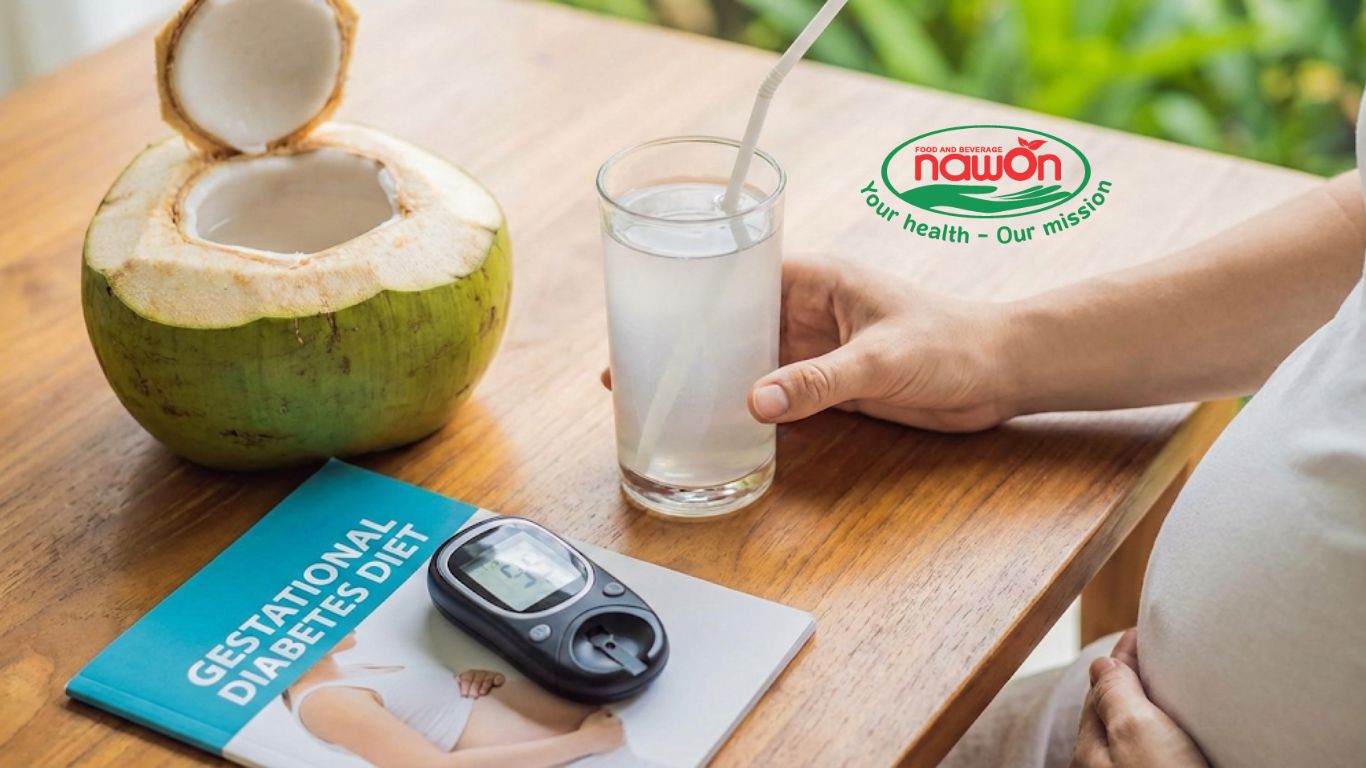
This is a critical section for many moms-to-be. While coconut water is healthier than soda or fruit juice, it is not calorie-free water.
It contains natural sugars. If you have been diagnosed with Gestational Diabetes (GD) or are at high risk, you must track your carbohydrate intake.
- The Advice: Treat coconut water as a food/snack, not just a drink.
- The Strategy: Pair it with a source of protein or healthy fat (like a handful of nuts) to prevent blood sugar spikes. Always consult your dietitian or doctor about portion sizes.
Debunking Common Myths About Coconut Water
Pregnancy folklore is vast, and coconut water has its fair share of myths. Let’s clear the air.
Myth 1: Does it make the baby’s skin fair?
Verdict: No. The baby’s skin color is determined entirely by genetics (DNA from you and your partner). No food or drink can alter your baby’s complexion.
Myth 2: Does it induce labor?
Verdict: No. There is no scientific evidence that coconut water triggers contractions or softens the cervix. It is safe to drink throughout all trimesters.
Myth 3: Can it cause miscarriage?
Verdict: No. When consumed fresh and in moderation, coconut water does not cause miscarriage. It is a safe, hydrating beverage.
Safety Precautions & Side Effects
While beneficial, “too much of a good thing” applies here.
Recommended Dosage
Moderation is key. Stick to 1–2 glasses (about 250-500ml) per day. Drinking gallons of it won’t give you extra benefits; in fact, it could upset your electrolyte balance.
Who Should Avoid It?
You should speak to your doctor before adding this to your daily diet if you have:
- Kidney Disease: High potassium levels can be dangerous if your kidneys cannot filter it effectively (Hyperkalemia).
- Low Blood Pressure: Coconut water can lower blood pressure slightly; if yours is already low, monitor how you feel.
Upcoming Surgery: Doctors may ask you to stop drinking it a couple of weeks before a scheduled C-section due to its effect on blood pressure control.
So, Should You Drink Coconut Water During Pregnancy?
Coconut water is a refreshing, nutrient-dense addition to your pregnancy diet. It helps prevent dehydration, relieves cramps, and provides a healthier alternative to sugary drinks. However, it doesn’t replace plain water, and it does contain sugar, so enjoy it in moderation.