

Starting a beverage business looks simple on paper. Develop a formula, design the label, find a manufacturer, and get onto shelves. In practice, that sequence is where many founders get into trouble.
Most failures beverage business do not happen because the product tastes bad. They happen because the economics are weak, the launch is underfunded, or distribution expands before real demand is proven. In other words, a beverage business usually breaks at the operating level long before it breaks at the product level.
The companies that succeed tend to follow a different path. They validate cost structure early, protect gross margin, build retail traction in focused markets, and choose a production model that fits their stage of growth.
For founders, importers, and private label buyers, the takeaway is simple: success in this category comes from disciplined execution, not just a good concept.
Why a Beverage Business Fails
1. Startup costs are underestimated
One of the fastest ways to weaken a launch is to treat development cost as the total cost. In reality, the first production run is only one part of the equation. A new drink brand also has to fund formula work, testing, packaging, logistics, trade support, and early marketing.
Here is a practical view of common early-stage cost areas:
| Expense Category | Typical Early-Stage Range | What It Usually Covers |
|---|---|---|
| R&D and formulation | $5,000–$15,000 | Formula refinement, flavor adjustment, stability review, nutrition panel prep |
| Packaging and brand development | $10,000–$30,000 | Label design, packaging structure, visual identity |
| First production run | $30,000–$100,000+ | Ingredients, packaging materials, MOQs, filling, setup costs |
| Trade and launch marketing | $20,000–$50,000 | Sampling, in-store activation, introductory promotion, digital support |
These ranges vary by category, pack format, ingredients, and channel strategy, but the pattern is consistent: founders often budget for production and overlook the working capital needed after launch.
A common failure pattern is this: the product gets made, enters the market, then runs out of support before reorders, local activation, and retail performance have time to build.

2. Margins are too weak to support growth
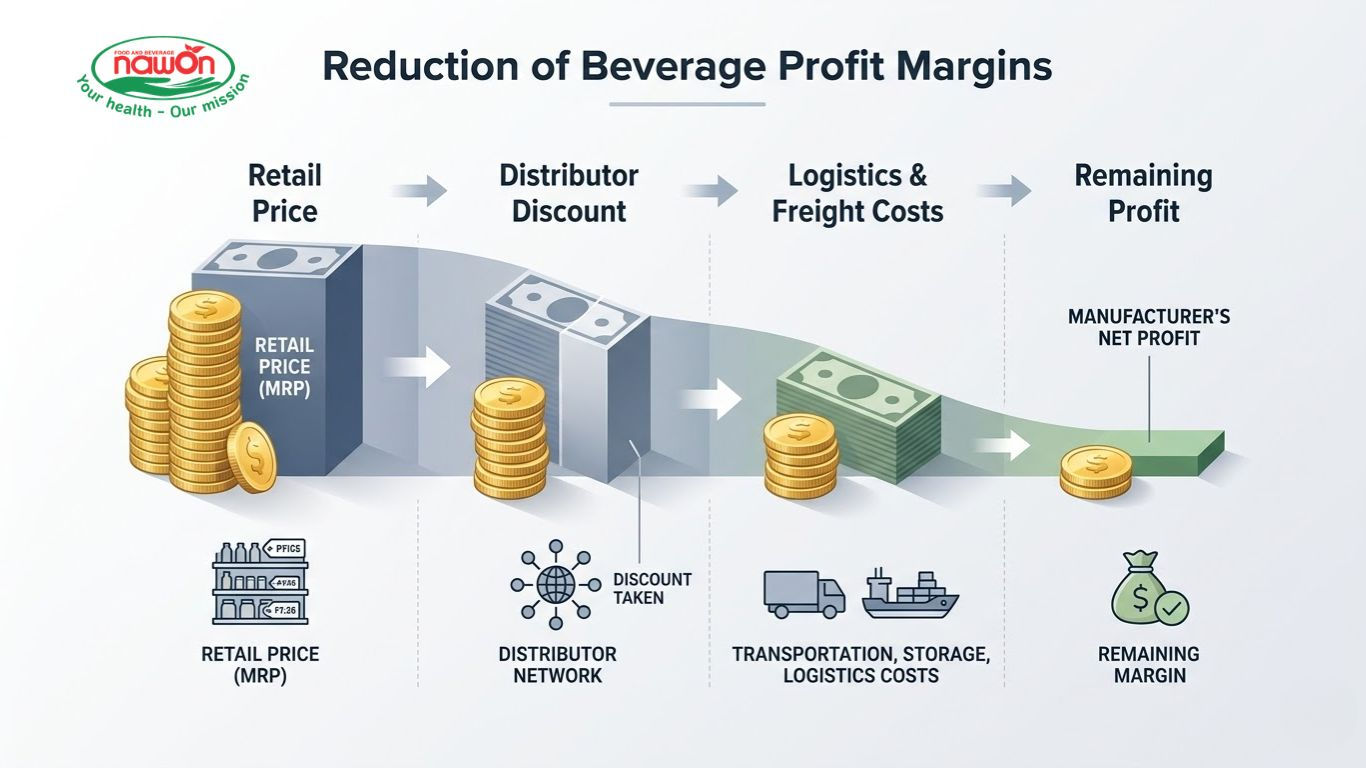
A beverage business needs more than shelf presence. It needs sufficient margins to cover distributor fees, retailer markups, freight, warehousing, promotions, and market development.
This is where many drink startups struggle. They may create a product with strong taste and good packaging, but the landed cost leaves too little room for the rest of the system. Once trade discounts, logistics, and sales support are added, the model becomes difficult to sustain.
A healthier approach is to treat gross margin as a strategic filter from the start. If the numbers don’t work before launch, scaling usually makes the problem worse, not better.
3. Distribution expands before sell-through is proven
Getting listed is not the same as building a durable company. A drink brand can secure shelf space and still fail if retail movement is weak.
Many founders chase store count too early. On the surface, broad distribution looks like progress. In practice, it can create thin velocity across too many accounts, especially when marketing support is limited. That leads to slow sell-through, aging inventory, and weak reorder data.
The stronger brands tend to do the opposite. They focus on a concentrated market first, build local awareness, test repeat demand, and use that proof to expand later.
For a beverage business, local traction is often more valuable than early national reach.
4. The production model creates too much operational drag
Some founders assume that more control always means better outcomes. That is not usually true in early-stage manufacturing.
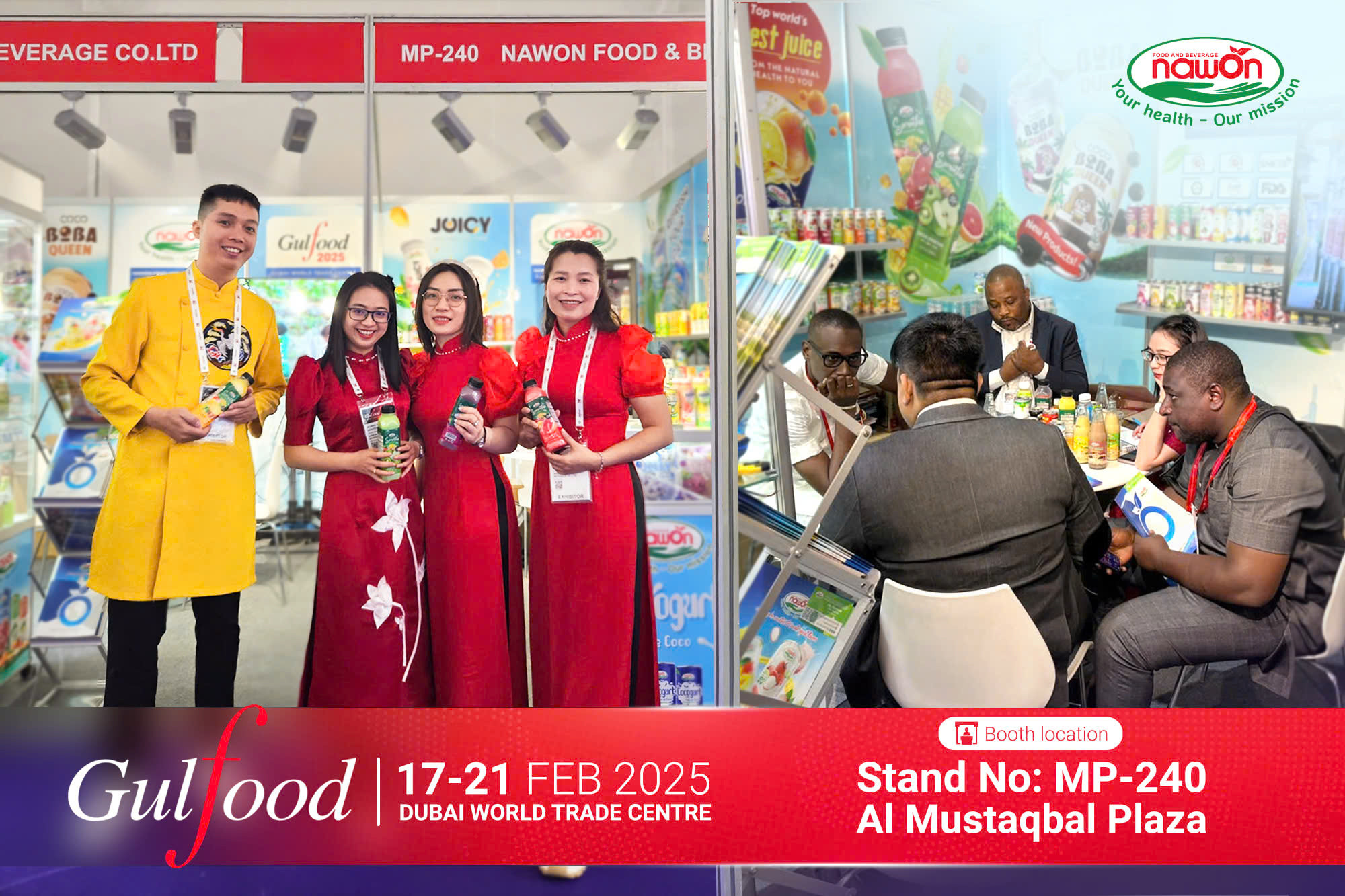
Owning production can entail higher fixed costs, greater staffing complexity, stricter quality management requirements, and greater capital exposure. For most new entrants, that is a difficult burden to bear before demand stabilizes.
That is why many newer beverage companies stay asset-light. Instead of investing in equipment and plant operations, they invested in formulation, branding, retail support, and market expansion.
What Successful Beverage Brands Do Differently
They solve a clear consumer need.
Winning products rarely enter the market as “just another drink.” They are positioned around a distinct use case, benefit, or audience.
That could be:
- hydration
- energy
- clean-label refreshment
- wellness support
- indulgence
- convenience
- alcohol-free lifestyle positioning
The clearer the proposition, the easier it becomes to justify pricing and communicate value.
They grow in focused markets first.
Many successful operators build traction close to home before expanding outward. Instead of scattering resources across hundreds of stores, they build a strong local footprint through independent retailers, gyms, cafés, and regional accounts.
That approach produces better feedback, tighter inventory control, and stronger sell-through data. It also gives the brand a more credible story when approaching larger distributors or chains.
They treat commercialization as seriously as branding.
A formula that performs well in a development setting may behave very differently at production scale. Shelf life, packaging compatibility, ingredient stability, and label accuracy all matter.
This is where technical preparation becomes a growth issue, not just a compliance issue. A product that is not commercially ready can cause delays, quality inconsistencies, or avoidable costs later.
For beverage founders, one of the smartest decisions is to validate the product as a commercial product early, not just as a concept.
OEM vs. Co-Packer vs. Self-Manufacturing
The production model directly impacts the cost structure, launch speed, and operational complexity.
| Model | How It Works | Advantages | Tradeoffs | Best Fit |
|---|---|---|---|---|
| Self-manufacturing | The brand owns and operates the facility | Maximum control over process and output | Highest capital need and operational burden | Established companies with stable volume |
| Co-packer | The brand provides the formula and often manages key inputs while the partner manufactures | Lower fixed cost, access to existing lines | More coordination required from the brand | Companies with sourcing capability and established formulas |
| OEM / private label | The manufacturing partner supports development, sourcing, production, and packaging | Faster launch, simpler execution, easier scale-up | Less direct control over plant operations | Startups, importers, distributors, and private label buyers |
For many early-stage teams, OEM is the more practical choice. It reduces internal complexity and allows the business to stay focused on sales, distribution, and brand-building rather than plant management.
A Practical Launch Checklist
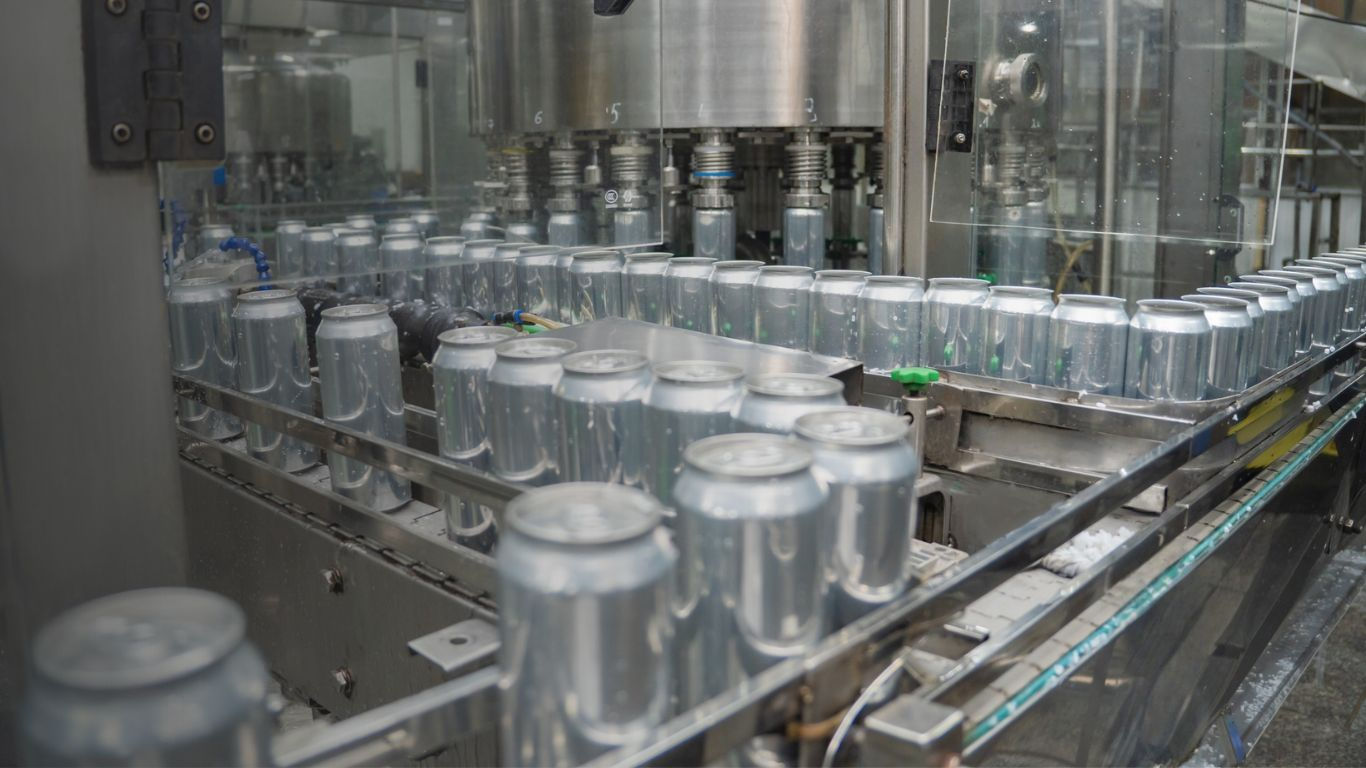
Before scaling, ask these questions:
- Is the formula ready for commercial production, not just pilot testing?
- Do unit economics still work after distribution and retail markups?
- Is there a realistic plan to drive repeat purchases in the first market?
- Does the production model reduce risk or increase it?
- Are packaging, documentation, and compliance ready for the target market?
A Smarter Path to Growth
A stronger beverage business usually follows a disciplined sequence:
- Build a commercially viable product
- Protect margin before chasing volume
- Prove retail movement in a focused geography
- Choose the right manufacturing structure for the current stage
- Scale only after the repeat demand is visible
Choosing the Right Manufacturing Partner
For founders and buyers entering this category, the right partner can reduce risk across formulation, sourcing, production, documentation, and scale-up.
When evaluating support, the key question is not just price. It is whether the partner can help the brand move efficiently from concept to repeatable production while maintaining consistency and market readiness.
At Nawon, we support beverage projects through OEM and private label manufacturing designed for commercial growth. For businesses that want to stay lean, move faster, and reduce execution risk, the right production partnership can make expansion much more manageable.
FAQs
How much does it cost to start a beverage business?
The cost depends on product type, packaging, production scale, and go-to-market plan, but founders should budget for more than just formula development and first-run manufacturing.
What margin should a beverage brand target?
The right target depends on channel structure, but margins must be strong enough to support distributors, retailers, logistics, and promotional spending.
Should a startup build its own facility?
In most cases, early-stage brands are better served by outsourced production. It typically lowers fixed costs and allows more focus on market development.