

Selecting the right beverage packaging for export is a critical decision that dictates the success of international market expansion. Long transit times, unpredictable temperature fluctuations inside shipping containers, and multiple touchpoints during loading and unloading all pose significant risks to product integrity.
Choosing the correct format directly impacts product safety, extending the time a beverage remains fresh and consumable. Furthermore, packaging influences transportation costs through weight and spatial efficiency, while also shaping brand perception upon arrival in the destination market. Importers and distributors require products that not only look appealing on retail shelves but also survive the rigorous journey from the manufacturing facility to the final point of sale without damage, leakage, or spoilage.
Understanding the various beverage packaging materials and their specific applications is essential for beverage brand owners, startups planning international expansion, and companies seeking reliable OEM beverage packaging. This guide explores the practical considerations for effectively navigating beverage export packaging solutions.
Why Beverage Packaging Matters in Global Export
Several key factors heavily influence export packaging decisions: product shelf life, transportation durability, climate conditions during shipping, regulatory compliance in destination markets, and logistics efficiency. International distribution networks inherently require more time, and products must maintain their quality, flavor profile, and nutritional value for many months. Packaging must absorb the vibrations of freight trains, withstand vertical compression, and navigate local recycling laws in the destination country.
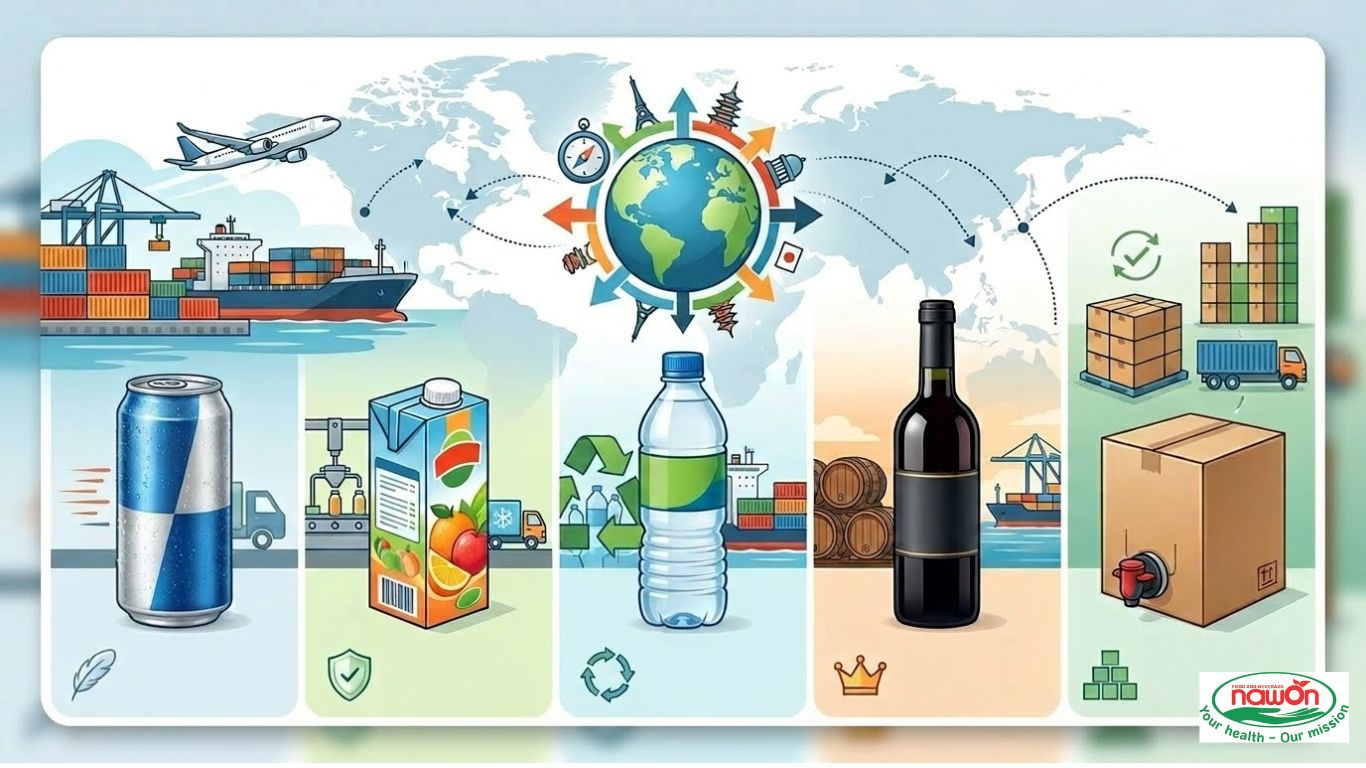
To help busy importers and brand owners quickly evaluate their options, the table below summarizes the core attributes of the most common export packaging formats:
Beverage Export Packaging Comparison
| Packaging Type | Export Advantages | Limitations | Suitable Beverage Segment | Freight Cost Optimization |
| Aluminum Cans | Absolute light/oxygen barrier, highly recyclable, stackable. | Susceptible to denting if improperly palletized. | Carbonated drinks, energy beverages, RTD teas. | Excellent (Lightweight & high density) |
| Aseptic Cartons | Ambient storage, long shelf life without cold chain logistics. | Complex recycling process in certain global regions. | Juices, dairy, plant-based milks, coconut water. | High (Eliminates refrigeration costs) |
| PET Bottles | Cost-effective, shatter-resistant, high product visibility. | Higher oxygen permeability compared to metal/glass. | Still water, sports drinks, cold-pressed juices. | High (Lightweight material) |
| Glass Bottles | Premium brand positioning, absolute taste preservation. | Heavy, fragile, requires secondary protective packaging. | Premium mineral water, kombucha, alcoholic beverages. | Low (Heavyweight & bulky) |
| Bag-in-Box | Prevents oxidation after opening, highly space-efficient. | Not suitable for single-serve retail distribution. | Bulk syrups, concentrates, food service distribution. | Excellent (Maximizes pallet volume) |
Aluminum Cans: Lightweight and Export-Friendly
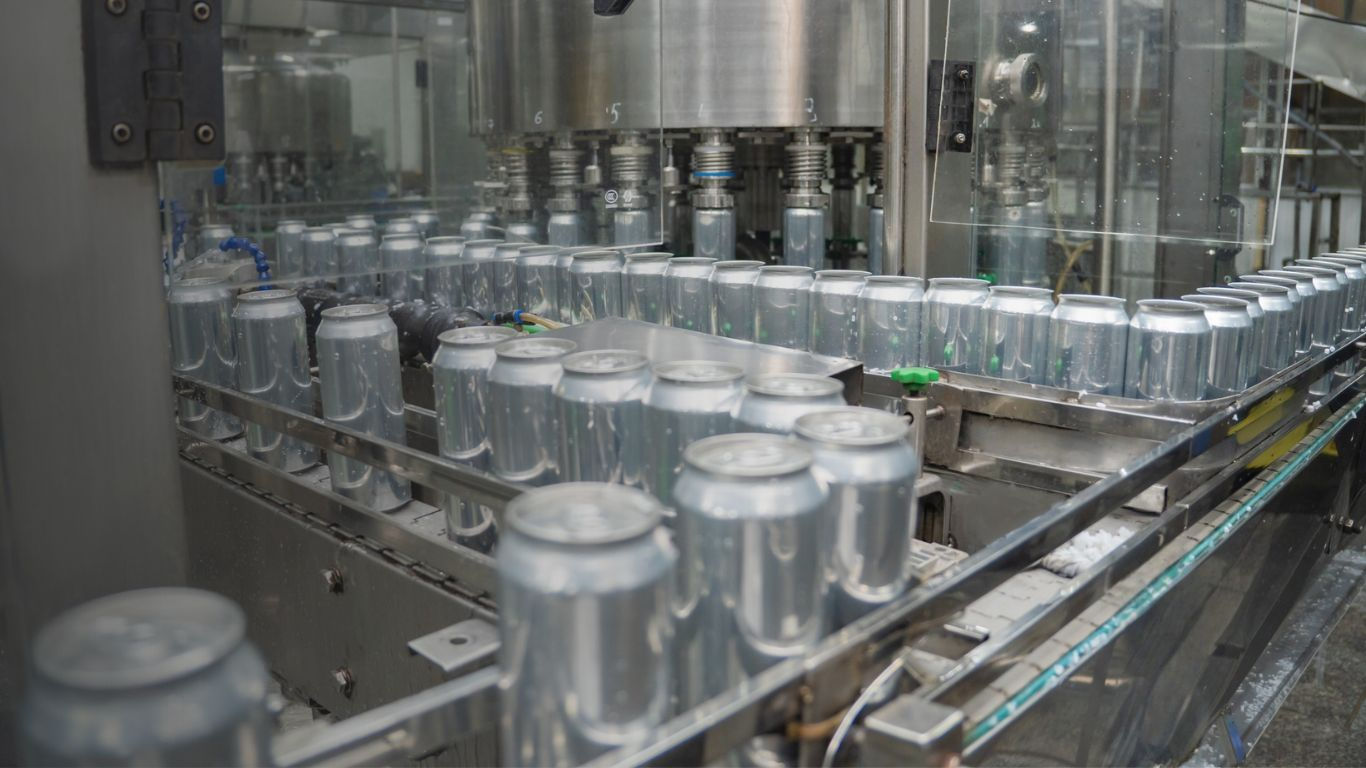
Aluminum cans are consistently ranked among the best beverage packaging for export due to their exceptional physical properties and logistical advantages. This format is heavily utilized across the global beverage industry, particularly for carbonated drinks, energy beverages, and ready-to-drink teas.
The primary advantage of aluminum can beverage packaging is its absolute barrier properties. Aluminum completely blocks oxygen and ultraviolet light from reaching the liquid inside. This protection prevents oxidation and flavor degradation, effectively extending the shelf life of sensitive beverages without the need for artificial preservatives.
From a logistics perspective, industry reports indicate that transitioning to aluminum cans significantly reduces shipping weight, thereby optimizing global freight costs. Reducing the dead weight of a shipment lowers ocean freight and overland trucking expenses. Furthermore, cans feature a highly uniform, stackable design. This geometry maximizes spatial efficiency, allowing exporters to fit more individual units onto a single pallet and, consequently, more pallets into a standard shipping container.
Sustainability is another major factor driving aluminum’s popularity in export markets. Aluminum is infinitely recyclable without loss of quality. As markets in the European Union and North America implement stricter environmental regulations, aluminum cans meet these high recyclability standards seamlessly.
Aseptic Cartons: Long Shelf Life Without Refrigeration
For non-carbonated liquids such as fruit juices, dairy products, and plant-based milks, aseptic carton packaging offers unparalleled advantages for international trade. Aseptic technology involves sterilizing the liquid beverage and the packaging material separately, then combining them in a sterile environment.
The resulting product possesses ambient storage capability, meaning it does not require refrigeration during transport or storage. By eliminating reliance on cold chain logistics, beverage exporters save significant money on specialized refrigerated shipping containers and climate-controlled warehousing.
Aseptic cartons achieve this extended shelf life through a complex multilayer structure. Typically composed of paperboard for structural rigidity, polyethylene for liquid sealing, and a microscopic layer of aluminum foil, this composition acts as a formidable barrier against oxygen and light. This specialized beverage shelf-life packaging ensures sensitive organic liquids remain fresh and safe for consumption for up to 12 months.
PET Bottles: Cost-Effective and Shatter-Resistant
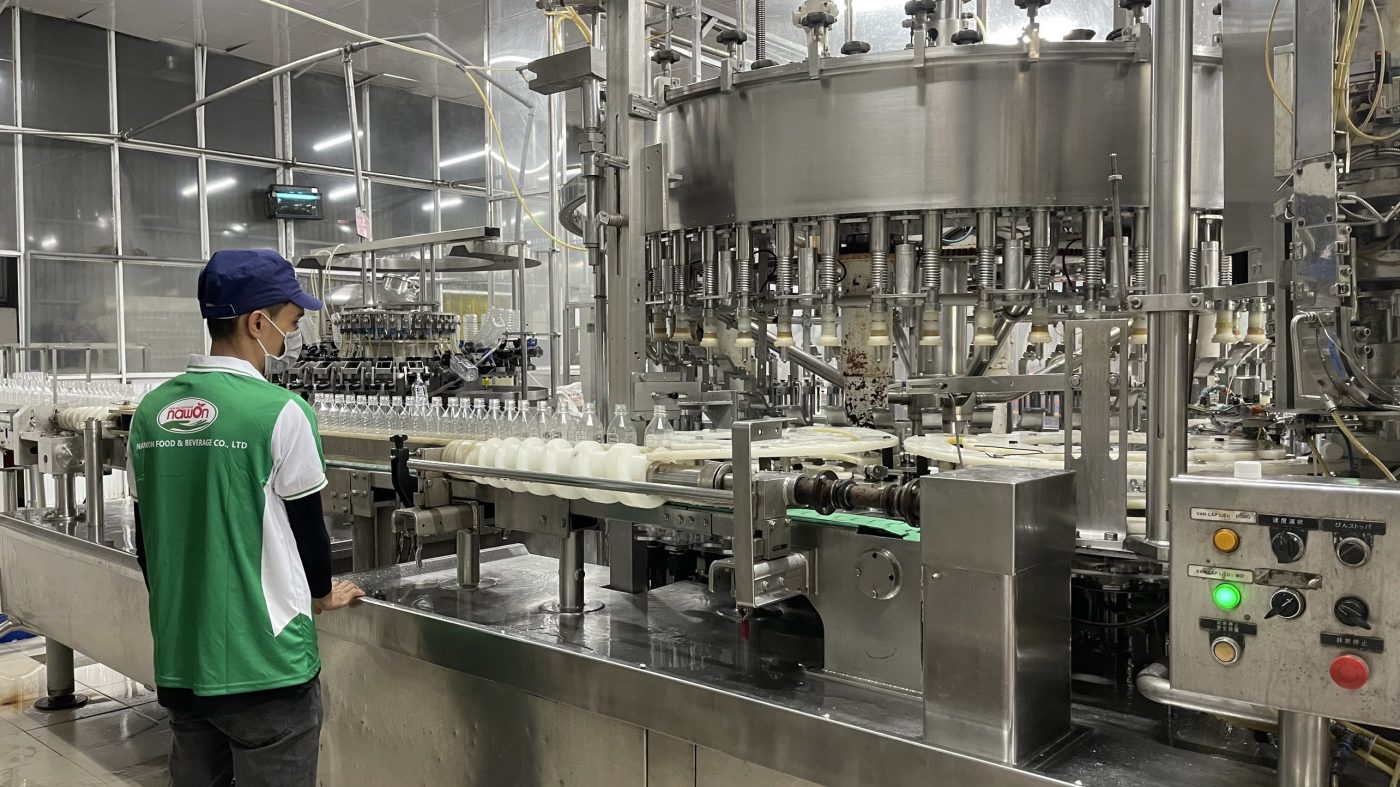
Polyethylene terephthalate (PET) is one of the most versatile and widely used beverage packaging materials globally. PET bottle beverage packaging is the standard choice for bottled water, sports drinks, and cold-pressed juices.
The cost-effectiveness of PET is a major draw for beverage manufacturers and importers. The material is relatively inexpensive to produce. Like aluminum, PET is lightweight, which directly reduces international shipping costs compared to heavier alternatives.
A crucial advantage of PET in export scenarios is its resistance to shattering. Unlike Glass, PET bottles can absorb significant impacts without breaking, reducing product loss during turbulent sea voyages and rough handling at ports. Exporters must also consider the growing importance of rPET (recycled PET). Many international markets mandate minimum recycled content thresholds for plastic packaging, making rPET a vital compliance strategy.
Glass Bottles: Premium Beverage Positioning
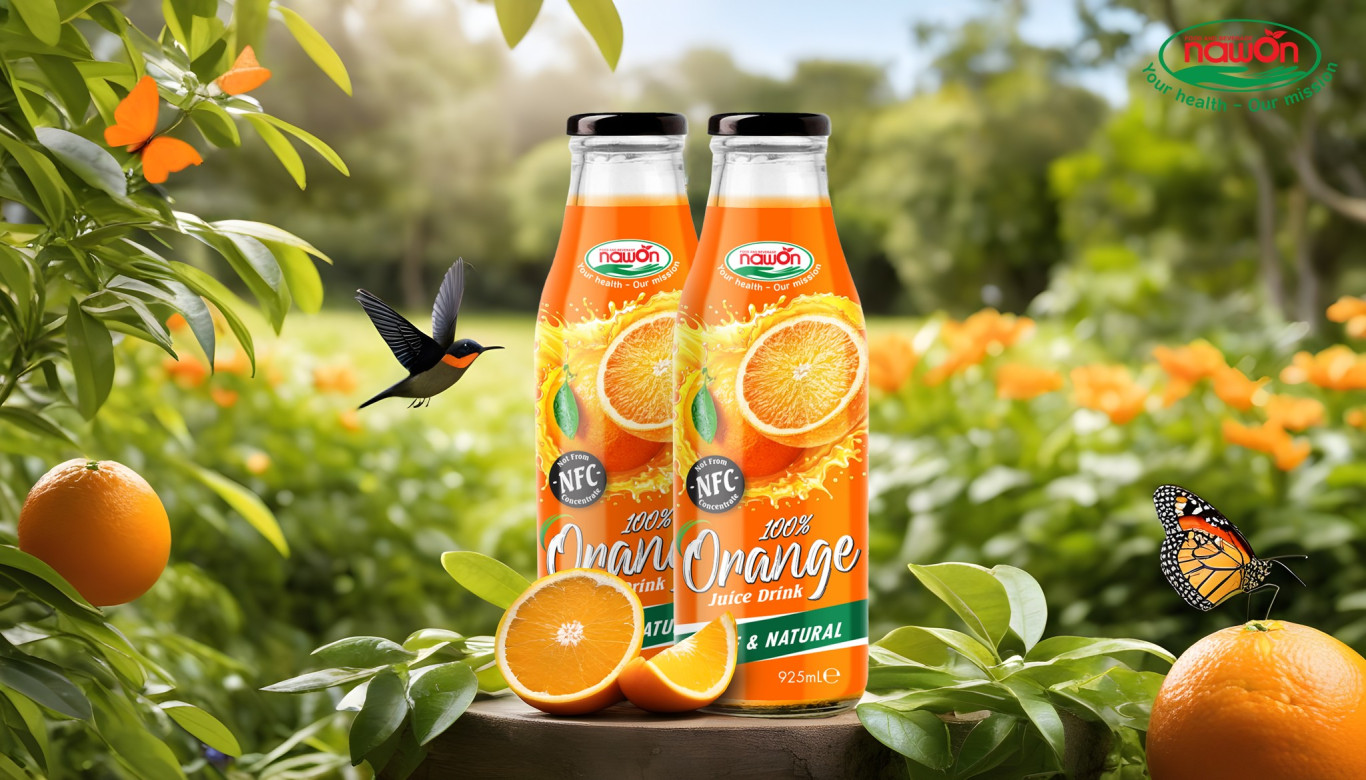
While logistics favor lighter materials, glass bottle beverage exports remain a dominant force in specific product categories. Glass is traditionally associated with luxury, heritage, and high quality, making it the preferred choice for premium mineral waters, high-end kombuchas, and alcoholic beverages.
Glass offers superior taste preservation. It is completely impermeable and chemically inert, meaning it will never interact with the beverage inside, ensuring the flavor profile remains exactly as the manufacturer intended.
However, exporting glass bottles presents substantial logistical and financial challenges. Glass is heavy, significantly increasing freight costs per unit. The fragility of Glass also introduces a high risk of breakage during international transit. To mitigate this risk, exporters must invest heavily in protective secondary packaging, such as sturdy corrugated cardboard dividers and extensive pallet wrapping, which adds to the overall cost and dimensional weight of the shipment.
Bag-in-Box Packaging for Bulk Beverage Export
Bag-in-box beverage packaging is an increasingly popular format for the foodservice industry and bulk consumer distribution. This system consists of a strong, multi-layered plastic bladder housed in a rigid corrugated cardboard box, typically with a dispensing tap.
The inner bags are vacuum-sealed and collapse as the liquid is drawn out. This design prevents oxygen from entering the container, effectively stopping oxidation. As a result, bag-in-box formats offer an extended shelf life even after the package has been opened.
This format is highly space-efficient. The rectangular shape of the outer boxes allows for perfect palletization with zero wasted space, maximizing the volume of liquid that can be transported in a single shipping container. It provides a highly efficient, cost-effective method for exporting large volumes of syrup, water, and juice concentrates.
Key Factors to Consider When Choosing Beverage Packaging for Export
Selecting the right export beverage packaging options requires a systematic evaluation of several interconnected factors. Beverage brands and their manufacturing partners must analyze the following criteria to ensure a successful international launch:
- Durability and weight: The physical demands of global shipping require robust materials. Lightweight options directly reduce freight costs, as international shipping is often billed by weight or dimensional weight. Minimizing mass allows exporters to ship more volume within legal container limits.
- Shelf life protection: High-barrier packaging is required for products containing vitamin C, natural colors, or sensitive organic compounds. The chosen material must provide adequate oxygen and UV protection tailored to the specific formulation to survive the months-long export journey.
- Market compliance: Exporting requires strict adherence to destination country regulations. Packaging must accommodate specific labeling laws, mandatory recycling symbols, and localized nutritional information to prevent shipments from being rejected by customs.
- Sustainability requirements: With a global shift toward circular economies, demand for recyclable packaging is growing in Europe, North America, and Asia. Brands must prioritize materials like aluminum, widely accepted PET, or responsibly sourced cartons.
- Space efficiency: Profitability heavily depends on maximizing pallet and container capacity. Packaging formats that nest tightly or stack cleanly reduce shipping “air,” lowering the per-unit transportation cost and making the beverage more competitive internationally.
NAWON Food and Beverage serves as a prime example of a manufacturer that supports beverage brands with comprehensive, export-ready packaging solutions. By managing the entire process from formulation to final packaging, experienced manufacturers ensure that products are perfectly calibrated for the physical and commercial demands of global export.
Summary
Selecting the most appropriate beverage packaging for global markets is a fundamental pillar of international business strategy. The success of a beverage export program relies entirely on packaging durability, precise shelf life protection, maximum cost efficiency, and strict compliance with international regulatory standards.
Whether utilizing lightweight aluminum cans for spatial efficiency, aseptic cartons for ambient distribution, or PET bottles for cost-effective resilience, the material must align with the product type and the destination market. Beverage brands aiming for successful global expansion should work closely with experienced manufacturing partners to engineer packaging solutions that protect the product, lower logistical costs, and appeal to international consumers.
FAQ Section
Why are aluminum cans popular for beverage export?
Aluminum cans are popular because they are incredibly lightweight, stack efficiently on pallets, and completely block light and oxygen. This protects the beverage quality while significantly reducing international freight costs.
Is PET packaging suitable for international shipping?
Yes, PET packaging is highly suitable for international shipping. It is cost-effective, lightweight, and shatter-resistant, making it ideal for bottled water and juices.
What packaging is best for premium beverages?
Glass bottles remain the standard for premium beverage positioning. Glass preserves taste perfectly and conveys a high-end, luxury image. Exporters using Glass must account for higher shipping weights and invest in robust secondary packaging to prevent breakage.