

For people living with diabetes, finding a drink that is refreshing but doesn’t spike blood sugar is a constant challenge. Coconut water is popular, but is it actually safe?
Here’s the practical takeaway: unsweetened, natural coconut water can be part of a diabetes diet when you keep portions in check. The benefits show up when it replaces sugary beverages, not when it’s treated like unlimited hydration.
Is Coconut Water Good for Diabetics?
Yes, when it’s 100% natural and unsweetened coconut water. If it’s sweetened, flavored, or blended, it can behave more like a soft drink.
What about the glycemic index (GI)?
Coconut water is often mentioned among low glycemic index drinks, but GI can vary by coconut maturity, processing, and brand. One human study reported coconut water GI in the low range (about 40–47).
You’ll also see consumer resources cite GI values in the low-to-mid range; the main point is the same: GI doesn’t cancel out carb portion size; it still matters.

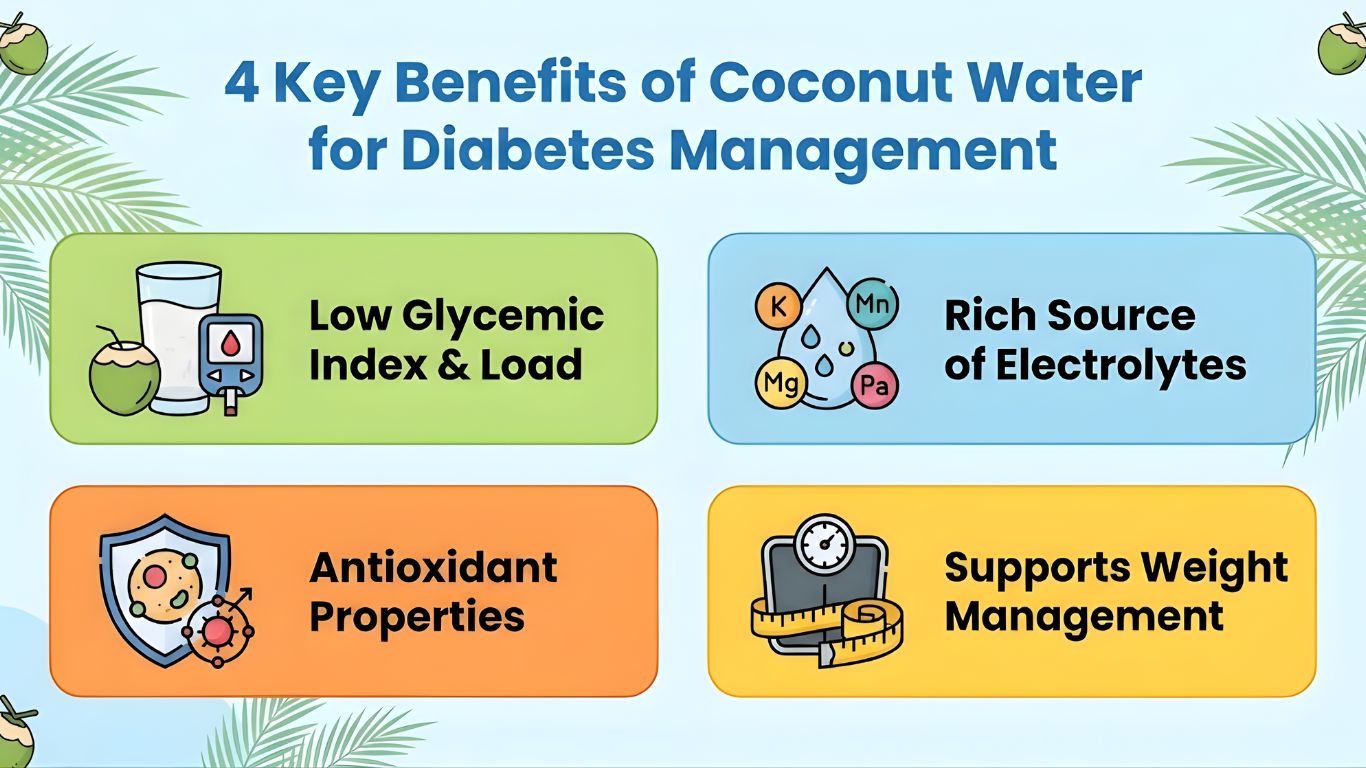
4 Key Benefits of Coconut Water for Diabetes Management
Low Glycemic Index & Load
Compared with many juices and sweetened beverages, plain coconut water tends to have a gentler glucose impact, especially at one serving. That’s precisely why it can be a useful drink for people trying to move away from sugary beverages.
Rich Source of Electrolytes
Coconut water contains key electrolytes (notably potassium and magnesium), which support fluid balance, which is helpful because diabetes can increase the risk of dehydration.
Antioxidant Properties
Oxidative stress is often discussed in relation to diabetes complications. Research in diabetic animal models has reported improvements in markers of hyperglycemia and oxidative stress, with coconut water showing promise but not achieving the same proven outcomes as in humans.
There’s also lab research exploring how coconut water may influence glucose handling in muscle tissue, which touches on mechanisms relevant to insulin sensitivity. Still, again, this is not a green light to “drink more.”
Supports Weight Management
If coconut water helps you replace soda, sweet tea, or sweetened coffee drinks, it can support calorie control, one of the most consistent lifestyle levers for better glucose control and insulin sensitivity over time. Diabetes organizations consistently emphasize choosing unsweetened/low-sugar beverages as a core habit.
Important Considerations and Precautions
Choose 100% Unsweetened Varieties.
Avoid products with added sugar, flavors, or “coconut drink” blends. For bottled options, use the label as your filter:
- “100% coconut water”
- “No added sugar”
- Check serving size (some bottles = 2 servings)
General guidance from diabetes nutrition resources: prioritize water and unsweetened beverages; treat sweetened drinks as occasional.
Moderation is Key
A practical guideline for many people is 1–2 cups (240–480 ml) per day. Because coconut water still contains natural carbohydrates, which add up if you drink large bottles casually.
Monitor Your Blood Sugar
Try coconut water like a “test food”:
- Start with 240 ml
- Check your glucose response (timing based on your care plan)
- Note whether it works better with a meal or after an activity
Who Should Avoid It?
Coconut water is high in potassium, and excessive intake has been linked to severe hyperkalemia in case reports, especially in people with kidney impairment or contributing risk factors.
If you have kidney disease, are on potassium-altering medications, or have ever been told your potassium levels are high, this is the main coconut water side effect to watch for with kidney concerns. Talk to your clinician before making it a habit.
Note for pregnancy: if you have gestational diabetes, coconut water is still a carbohydrate-containing drink. It may fit in small portions, but it should follow your carb targets and glucose monitoring plan. Check with your OB team or dietitian.
Safe Recipe Ideas: Coconut Water Drinks That Don’t Spike Added Sugar
These keep coconut water enjoyable without turning it into a sugar bomb. Each recipe is designed around one serving (about 240 ml).
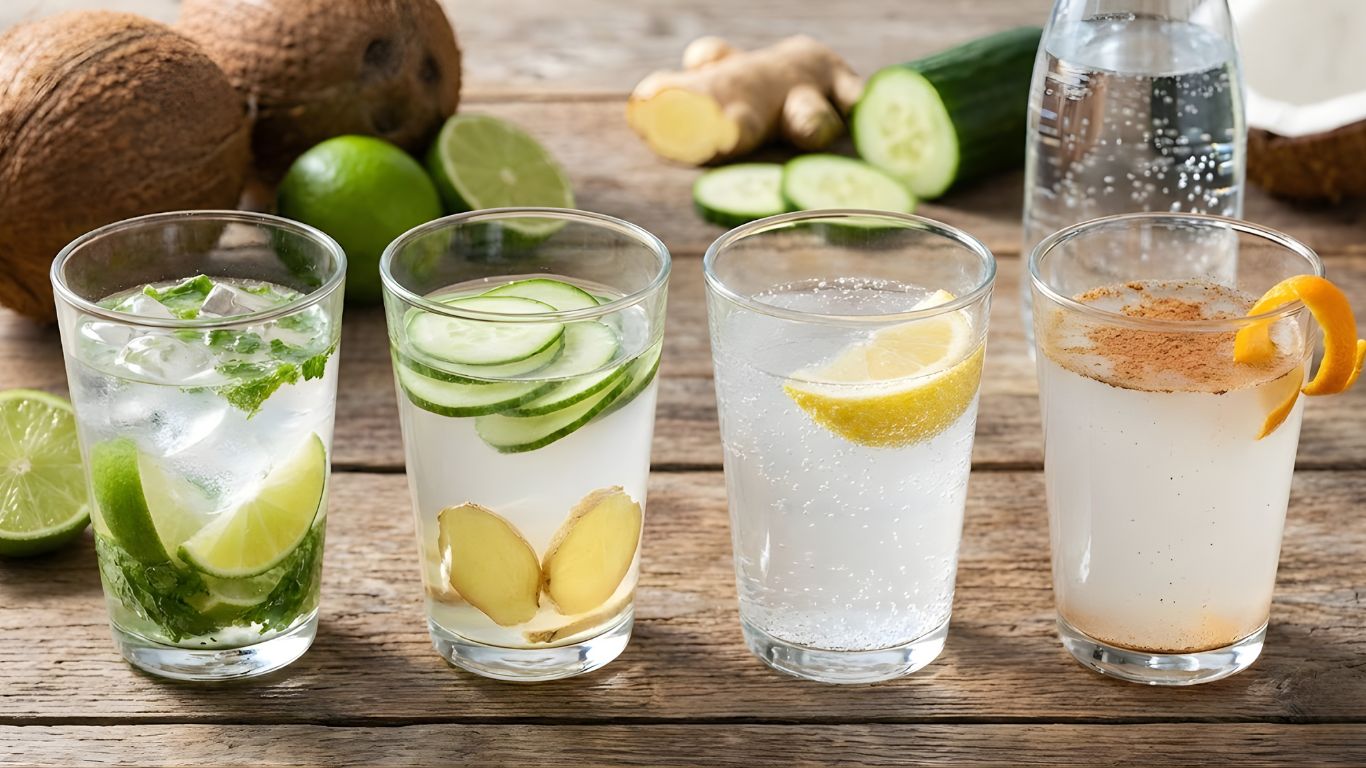
1) Lime Mint Coconut Water (simple + refreshing)
- 240 ml unsweetened coconut water
- Juice from 1–2 lime wedges
- A few mint leaves, lightly crushed
- Tip: Serve over ice. No sweeteners needed.
2) Ginger Cucumber Cooler (great after meals)
- 240 ml coconut water
- 4–6 thin cucumber slices
- 2–3 thin slices of fresh ginger
- Let it sit 5–10 minutes, then drink.
3) “Half-and-Half” Sparkling Coconut Water (lower carb feel)
- 120 ml coconut water + 120 ml sparkling water
- Squeeze of lemon
- This cuts the total carbs per glass while keeping flavor.
4) Cinnamon Citrus Coconut Water (warm-spice flavor, no sugar)
- 240 ml coconut water
- A pinch of cinnamon
- Orange peel twist (aroma) or a thin lemon slice
- Avoid: orange juice (it raises carbs quickly).
Avoid these add-ins if your goal is stable glucose: honey, syrup, condensed milk, sweetened yogurt, fruit juice, and “detox” powders with hidden sugars.
What to Remember
Coconut water can be a worthwhile upgrade from sugary drinks if it’s unsweetened and you keep it moderate. The sweet spot is using it as a portioned beverage (not an all-day water replacement), watching your response, and being extra cautious if kidney health is a concern.
Coconut water for diabetes is generally safe in moderation, but it’s still part of your carbohydrate budget. Treat it that way, and it can fit smoothly.
FAQ
Q: Can coconut water raise blood sugar?
A: Yes, especially if you drink large amounts or choose brands with added sugar. Even natural coconut water contains carbs, so portions matter.
Q: How much coconut water can a diabetic drink?
A: Many people do well with 1–2 cups (240–480 ml) per day, then adjust based on blood glucose readings and daily carb targets.
Q: Is fresh coconut water better than bottled water for people with diabetes?
A: Often, yes, fresh coconut water is less likely to contain added sugar or flavorings. A bottle can still be fine if it’s 100% coconut water with no added sugar, but you must check the label and serving size (some bottles contain more than one serving). Diabetes nutrition guidance consistently prioritizes unsweetened beverages and limiting added sugars, so the label matters more than the packaging.